
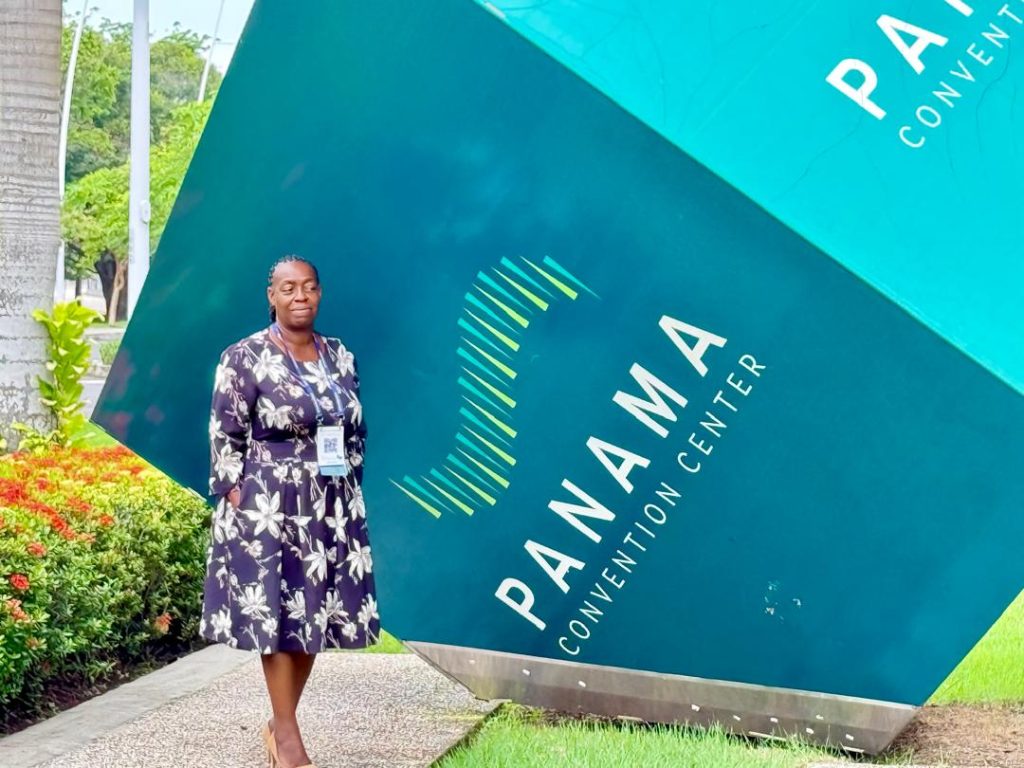
In June, I travelled to Panama City to represent Amref Health Africa at the 2026 International Social and Behaviour Change Communication (SBCC) Summit. The Summit brought together social and behaviour change practitioners, researchers, policymakers, community representatives, donors, creatives and communication professionals from across the world.
This year’s theme was ‘The Power of Connection: Reimagining Knowledge, Action and Equity in a Changing SBCC Landscape’. The discussions spanned public health, climate change, gender, governance, digital communication, misinformation, social norms, youth leadership, and artificial intelligence in SBCC. Throughout, one lesson remained consistent: telling communities what to do is not effective communication. SBCC must create space for dialogue, recognise community knowledge, and support people to participate meaningfully in decisions that affect their lives.
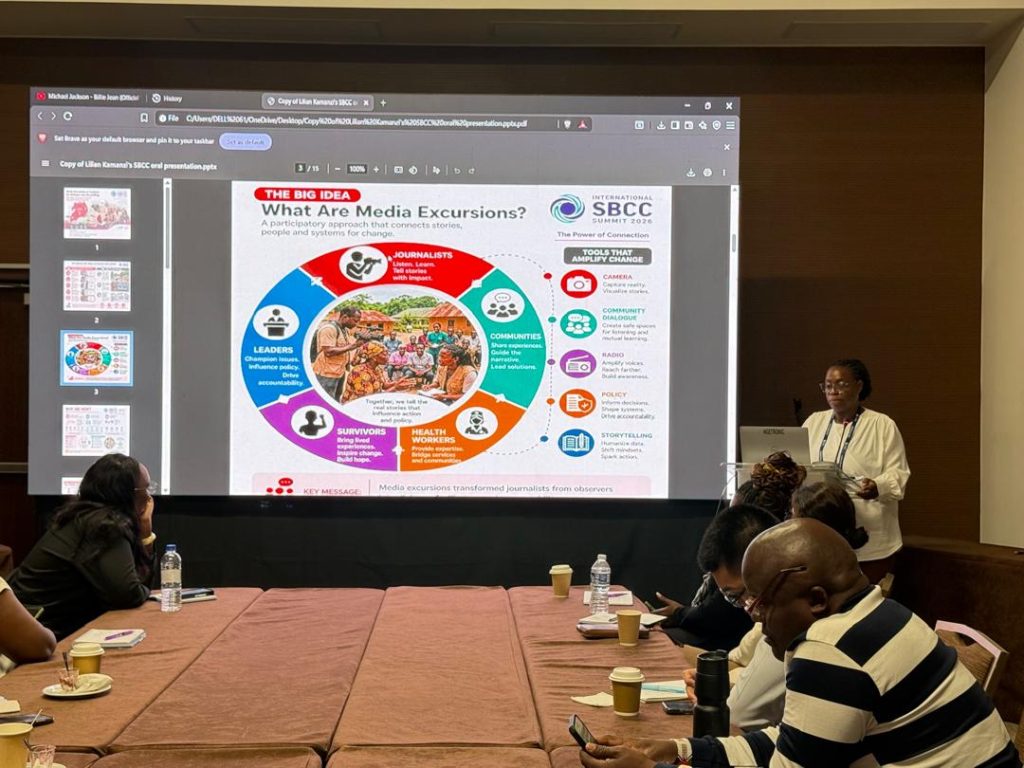
This is a principle Amref Health Africa in Uganda seeks to put into practice through regular media excursions. I had the opportunity to present our approach, and its impact, in a dedicated session at the Summit.
From reliable reporting to real-world impact
Media excursions allow journalists to visit projects, talk to communities, and experience the realities of health programmes first-hand, instead of relying on information gleaned from reports, press releases, and official statements. This helps journalists to understand the wider social and cultural factors affecting people’s health decisions. In turn, communities stop being statistics and become trusted voices in the story.
In Uganda, media excursions have contributed to more accurate, authentic and community-centred reporting around topics like immunisation, sexual and reproductive health, and maternal and child health. In fact, stories resulting from media excursions led by Amref Uganda have helped to:
- Address myths, rumours, and misinformation,
- Increase understanding of vaccines and immunisation services,
- Build public confidence in health interventions,
- Increase awareness and acceptance of sexual and reproductive health services,
- Amplify the experiences of community members and health workers,
- Strengthen accountability between communities, service providers, and decision-makers.
Community members share their concerns. Health workers provide supporting evidence. Journalists translate complex information into relatable, accessible stories. Leaders read these stories and respond to gaps identified by communities. Together, these interactions help strengthen trust.
In an environment where funding for health programming is more stretched than it has even been, media excursions are particularly valuable. One well-planned engagement can strengthen public awareness, community participation, media capacity, programme visibility, advocacy, and accountability.
Trust as a foundation for service uptake
Trust was one of the key themes running through the Summit, and it strongly reflects Amref’s experience in Uganda.
Even when people have access to health information and services, they may still hesitate to use them when they do not trust the message, messenger, service provider, or institution.
For vaccine programmes, trusted communication can help families understand the benefits of vaccination, ask questions and make informed decisions. For sexual and reproductive health, trust creates an environment in which adolescents, young people, women and families can seek information and services without fear of stigma, judgement or discrimination.
Media excursions support this process by providing credible platforms through which community members, health workers and programme participants can share practical experiences.
When people hear from individuals whose lives and circumstances resemble their own, health messages become more relatable and convincing – and people become more willing to act on the information they receive.
These questions are especially important during disease outbreaks. And indeed, the SBCC Summit was taking place against the backdrop of the ongoing Ebola outbreak in the Democratic Republic of the Congo: a direct threat to the health of the communities Amref serves in Uganda.
https://youtube.com/watch?v=SJctlT5haRo%3Fcontrols%3D1%26rel%3D0%26playsinline%3D0%26cc_load_policy%3D0%26autoplay%3D0%26enablejsapi%3D1%26origin%3Dhttps%253A%252F%252Famref.ch%26widgetid%3D1%26forigin%3Dhttps%253A%252F%252Famref.ch%252Fthe-power-of-connection-sbcc-summit-lilian-kamanzi-mugisha%252F%26aoriginsup%3D1%26vf%3D1
Returning home with renewed purpose
I returned to Uganda with several important reflections.
- Trust must be intentionally built and continuously protected. Trust is not created by a single message or campaign: it grows through consistent engagement, transparency, respect, and responsiveness.
- Storytelling must be ethical and community-centred. The people whose experiences we share must be represented with dignity and should understand how their stories will be used.
- Communication should be integrated into programme design from the beginning. SBCC should not be introduced only when a project needs publicity or visibility.
- Evidence and lived experience must work together. Data helps us understand the scale of a challenge, while community stories help us understand its human meaning.
- Technology must strengthen rather than replace human connection. Digital tools and AI can enhance our work, but they should remain guided by ethics, local knowledge, and human judgement.
The 2026 International SBCC Summit was a global meeting of people committed to improving how institutions listen, communicate, and work with communities.
It reminded me that communication is not simply about broadcasting messages or securing media coverage. It is about relationships, it is about whose voices are heard, and it is about creating conditions in which people can access credible information, participate in decisions, claim their right to health, and confidently use the services available to them.

By Lilian Kamanzi Mugisha, Communications Manager, Amref Health Africa in Uganda