
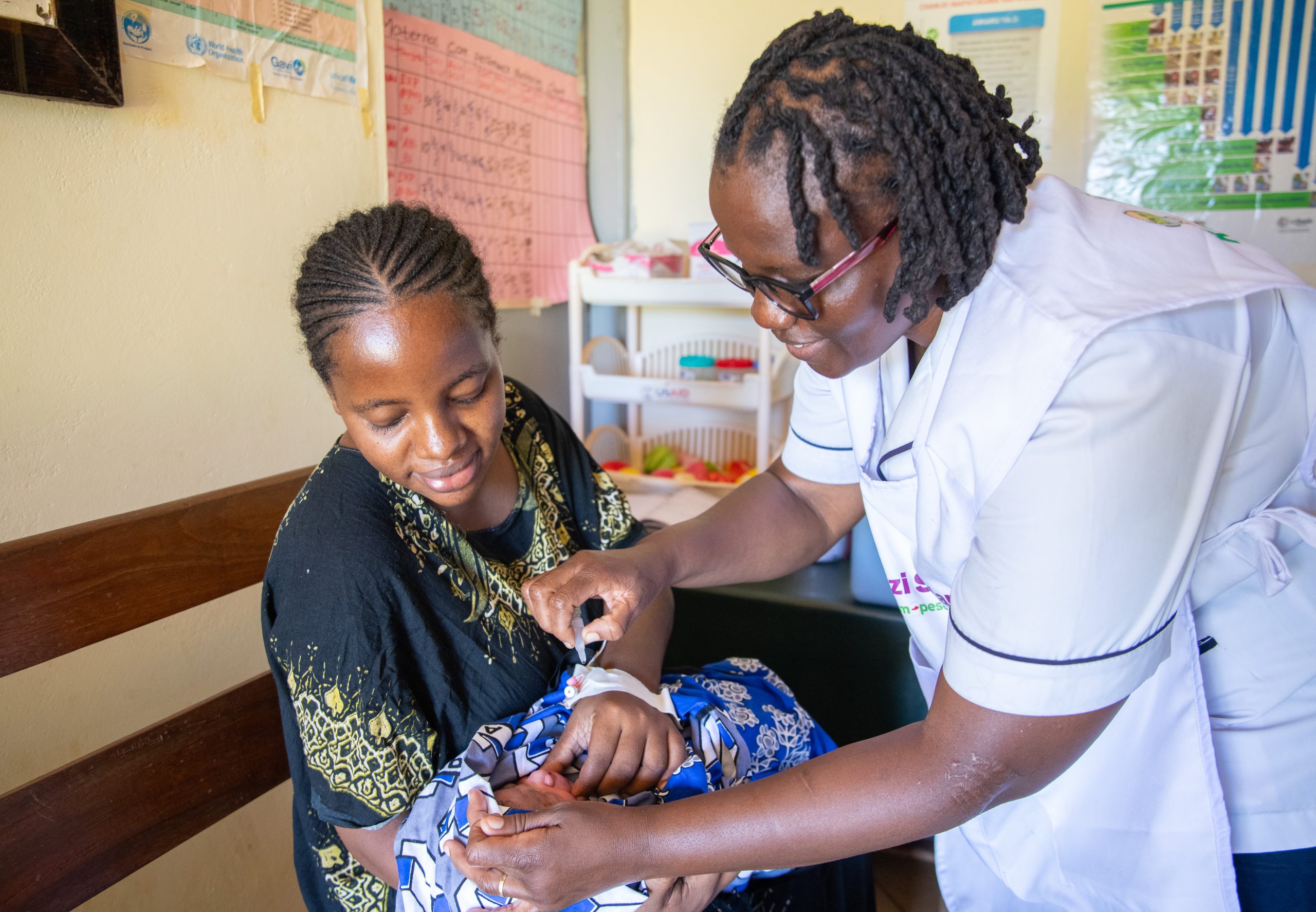
Kenya has made tremendous strides in reaching zero-dose children through a system-wide shift driven by data, community trust, and adaptive service delivery. The Immunisation Recovery Plan (2023–2025) and the “Big Catch-Up” initiative actively identify and vaccinate children who missed doses while strengthening routine immunisation systems for long-term resilience.
To expand coverage, Kenya has implemented strategies such as institutionalising catch-up vaccination policies and conducting Supplementary Immunisation Activities. These include the Measles-Rubella 2024 and Typhoid Conjugate Vaccine 2025 campaigns, while sustaining polio campaigns.
The country leverages the electronic Health Information System (eCHIS) to track defaulters in real time, enabling targeted follow-ups, especially in urban informal settlements where mobility and invisibility often leave children behind.
Integration of immunisation into broader primary healthcare (PHC) services, extended service hours including weekends, and strong community engagement improve access and uptake. Public-private partnerships and data-driven decision-making further enhance efficiency and accountability.
These combined efforts are leading to real improvements such as higher DTP1 and DTP3 coverage, greater data visibility, and fairer service delivery. Still, challenges remain. Cross-border movement, unmapped settlements, insecurity, staff shortages, and missing data from private clinics make progress harder.
As Dr Namu Kimungunyi from the National Vaccination and Immunisation Programme (Ministry of Health, Kenya) emphasised during the REACH OUT Immunisation Research Finding Dissemination workshop in Busia County, sustained investment and new ideas are critical to improving immunisation coverage. The key takeaway from her presentation is that reaching zero-dose children means going to where they are, making effective use of data for decision-making, and building flexible systems that adapt to the evolving needs of communities.
The REACH OUT needs assessment study by Amref Health Africa in Busia County reveals that closing immunisation gaps requires more than vaccine availability. It demands a deep understanding of the structural, behavioural, and social factors influencing caregivers’ decisions to vaccinate their children.
According to 2024 data from the Kenya Health Information System, approximately 4,636 children were classified as zero-dose, having missed all routine childhood vaccinations. The REACH OUT needs assessment across five sub-counties identified demand-side drivers of low immunisation uptake. These included persistent myths and misconceptions about vaccine safety, strong cultural beliefs favouring traditional medicine or prayer, and practical barriers such as long distances to facilities, limited service hours, and economic hardship.
At its core, the struggle is about trust in vaccines and healthcare workers, knowledge gaps, and social norms. Data shows that when caregivers trust health workers and understand the value of vaccines, they are more likely to complete immunisation schedules. In contrast, misinformation and negative experiences fuel hesitancy.
The Reach-Out Project adopts a holistic approach and commitment to community-based design of solutions that fit local realities. The projects leverage collaboration with community actors through an established community advisory board to co-create culturally relevant interventions that address the real reasons children are missed.
By using behavioural insights, strengthening communication, and leveraging digital tools like eCHIS, the project is changing how immunisation services reach families. This community-driven approach is helping Kenya move from broad coverage to real equity, ensuring that even the hardest-to-reach children receive life-saving vaccines.
When communities are engaged, trust grows, and data-driven action builds a stronger, more inclusive immunisation system.
- Author: Noah Wekesa, Digital Communications and Engagement Officer, Amref Health Africa
- Contributor: Yvonne Opanga, Technical Advisor, Learning and Impact, Secretariat, Amref Ethics and Scientific Committee