
“How do you deliver a baby without water?”
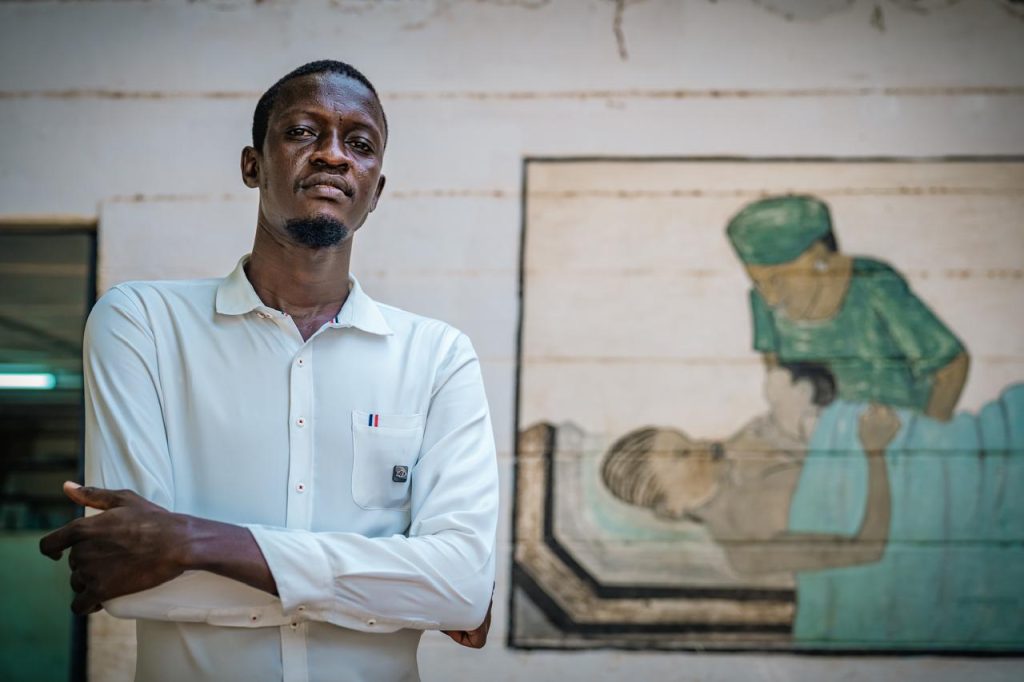
For Laurence Erongat, a Nursing Officer at Lopiding Hospital in Turkana County, this was never a rhetorical question. It was the reality he and his colleagues faced every day.
In Turkana West, where water is scarce and communities often travel long distances to find it, the same struggle extended into the hospital. There was no reliable water supply to support essential healthcare services. Every drop had to be fetched from distant, often contaminated and unprotected hand-dug scoop holes in dry river sandbeds, with caregivers walking between 5-8 kilometres, to bring small containers of water to the facility. Even then, it was never enough.
The shortage affected nearly every department, but nowhere more than the maternity ward.
“When a mother came to deliver at night, we had to work with whatever water was available,” Laurence recalls. “We had the structure, the staff and the patients. What we did not have was water.”
Without enough water, maintaining basic hygiene became a daily challenge. Health workers could not always wash their hands between procedures as consistently as they should. Delivery rooms could not be cleaned immediately after each birth, and mothers often had no opportunity to bathe after delivery. Keeping wards clean requires constant improvisation to prevent infection and control ongoing concerns.
The shortage also affected surgical services.
“If the ward is not clean, we cannot operate,” says Laurence. “Water is everything.”
That reality began to change when the hospital’s borehole was rehabilitated and equipped with a solar-powered pumping system through the Sustainable and Inclusive Water Access for Refugees and Host Communities in Turkana West (SIWA) Project, funded by Denmark in Kenya through the Inclusive Refugee Responses Programme in Kenya and implemented by Amref Health Africa.
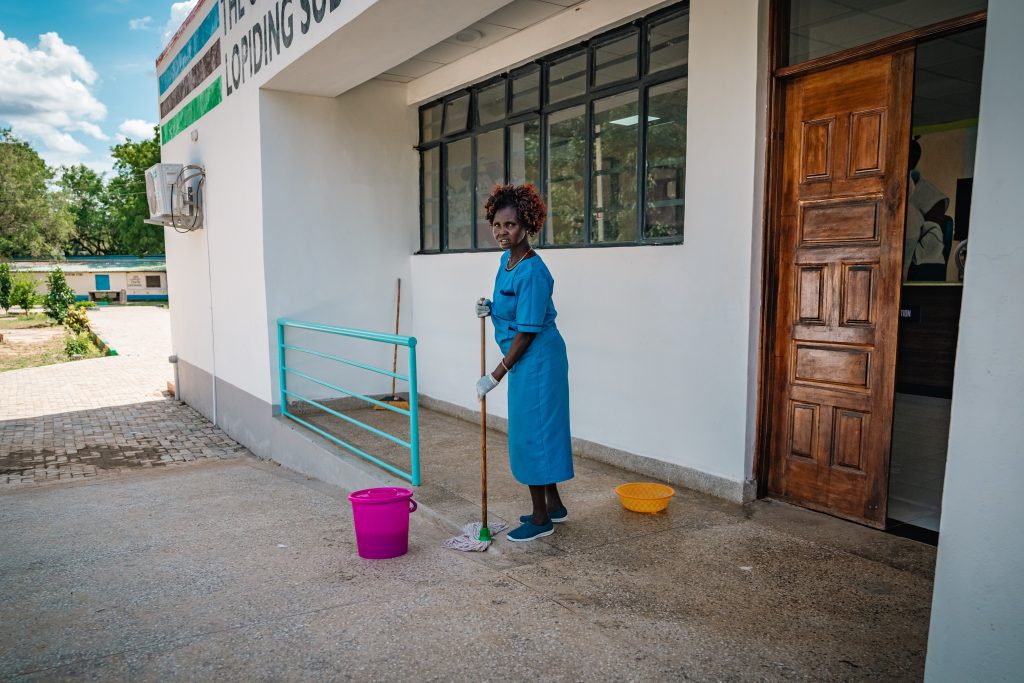
Today, clean water flows directly to the maternity and child health building, the operating theatre and five wards across the hospital.
For Laurence and his colleagues, the difference is immediate and visible.
Health workers can wash their hands consistently, clean delivery rooms immediately after every birth and maintain the hygiene standards needed to provide safe, quality care. Surgical procedures can now be conducted with confidence because the theatre has a dependable water supply, while critical equipment, including incubators in the newborn unit, can be used more effectively.
The changes have transformed the experience for patients as well.
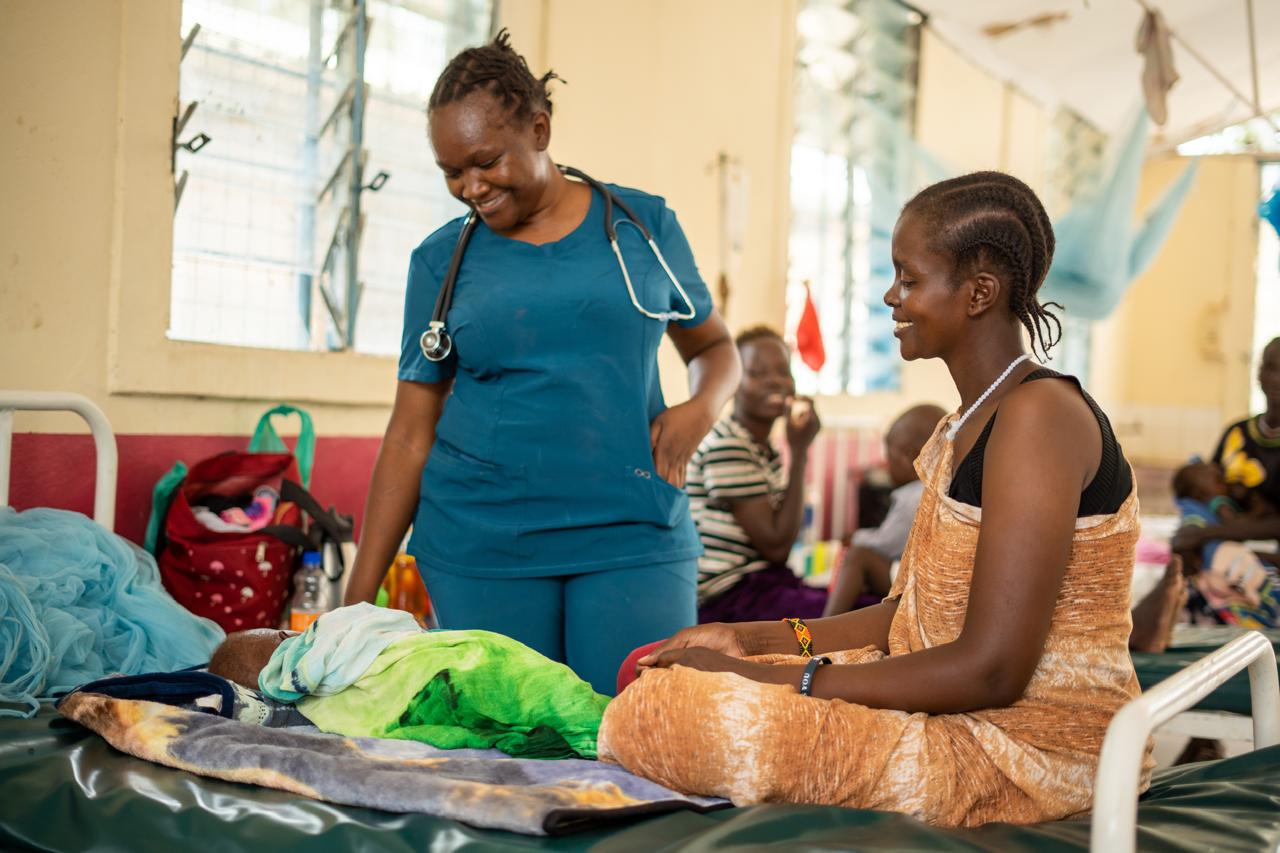
Mothers can now recover in a clean and dignified environment, with access to water for bathing after delivery and better sanitation throughout their stay. As confidence in the quality of care has grown, more families are choosing Lopiding Hospital for treatment. Today, each ward admits between 40 and 50 patients, compared with about 15 to 20 before reliable water became available.
For Laurence, the greatest transformation is not the infrastructure itself, but what it makes possible.
“When you have water, you can focus on caring for patients instead of worrying about where the next bucket will come from,” he says.
Across Turkana West, the SIWA Project is expanding access to safe water in health facilities, schools and communities, helping strengthen health systems while improving health, dignity and resilience for both refugees and host communities.
At Lopiding Hospital, the impact can be measured in cleaner wards, safer deliveries and renewed confidence in healthcare. It is also reflected in a question that no health worker should ever have to ask again:
“How do you deliver a baby without water?”
Author: Paullete Adhiambo, Communications Associate, Amref Health Africa in Kenya
Editor: Edna Mosiara, Ag Communications Manager , Amref Health Africa in Kenya
Contributors: Dennis Munai and Joy Mwangi