
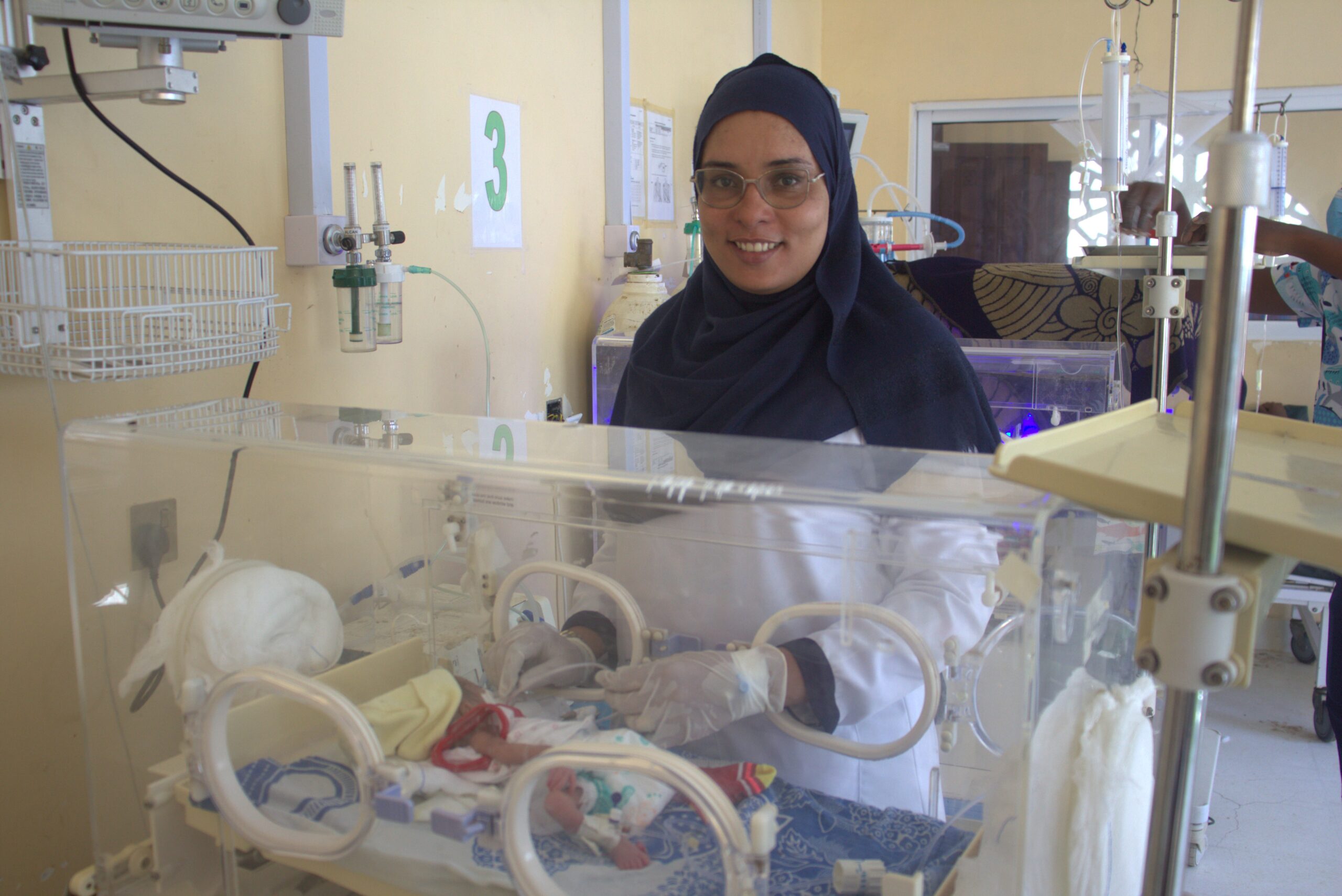
Nestled on the historic island of Lamu, where the winds of the Indian Ocean meet centuries-old Swahili culture, King Fahad County Referral Hospital stands as a vital healthcare hub for the region. Despite its geographical isolation and long-standing infrastructural constraints, the hospital serves a growing population of more than 200,000 people, responding daily to emergencies and increasingly complex care needs. At its core is a resilient workforce led by quiet heroes like Dr Nuru Salim, the hospital’s Medical Superintendent.
Dr Salim’s role extends far beyond clinical oversight to constant problem-solving under pressure. One of her most persistent challenges over the years has been ensuring reliable access to medical oxygen, an essential foundation for emergency response, maternal care, newborn survival, and advanced clinical interventions.
“Oxygen is not just a supply, it’s survival,” Dr Salim explains. “For years, the hospital endured unpredictable shortages, forcing us to refer even the most fragile patients—newborns struggling to breathe, mothers in distress, accident victims—on long and risky journeys to Mombasa or Kilifi. These delays came at a high cost, often measured in lives lost.”
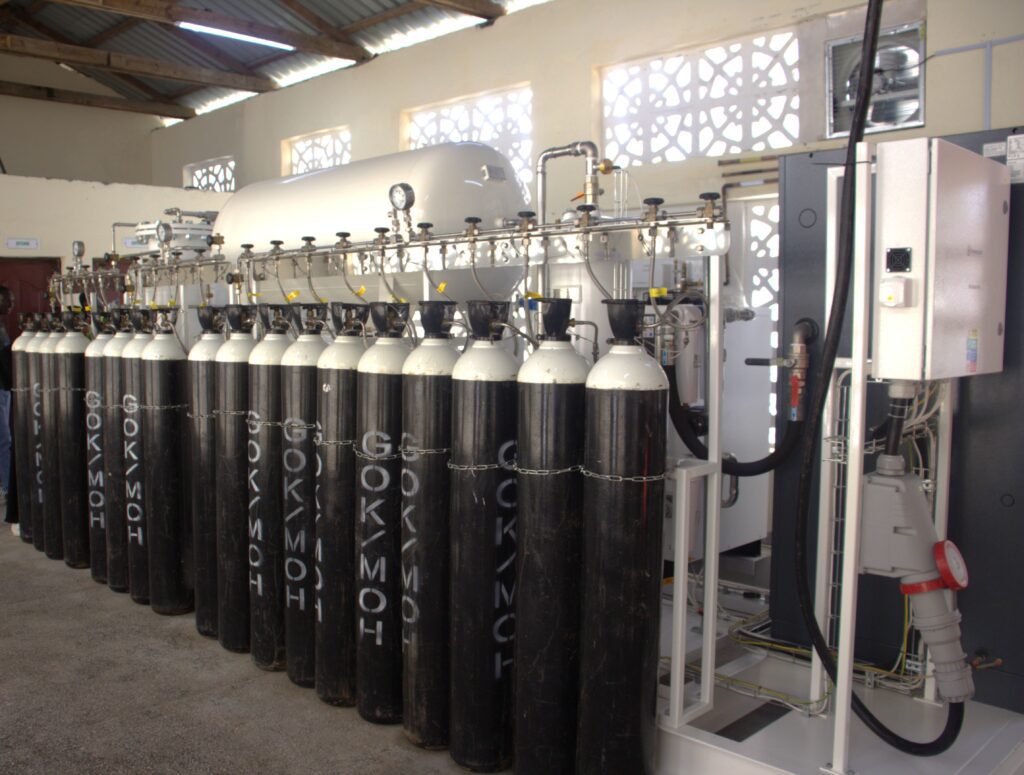
Previously, the hospital relied on monthly oxygen deliveries, a process fraught with delays, security risks, and high financial strain. A single supply run for just ten 80-kilogram cylinders could cost between KES 40,000 and 50,000 and take up to ten days, often requiring coordination with the Kenya Navy to transport the cylinders across the sea. “The logistics were overwhelming,” Dr Salim recalls. “Every delivery drained resources we desperately needed elsewhere, and every delay limited the kind of care we could safely offer.”
The commissioning of the hospital’s medical oxygen processing plant on 3 July 2025 marked a decisive turning point. For the first time, oxygen availability was no longer a daily uncertainty shaping clinical decisions. “It means improved quality of care for our patients,” says Dr Salim. “We can now redirect the resources previously spent sourcing oxygen from other counties towards strengthening our health system through specialised training for staff and upgrading critical infrastructure within the hospital.”
As oxygen became dependable, a more profound change followed. With a stable, locally managed supply, King Fahad County Referral Hospital could safely support higher levels of care that had previously been impossible. This change directly led to the opening of Lamu County’s first Intensive Care Unit, transforming the hospital from a stabilisation and referral centre into one capable of providing advanced, lifesaving care on the island itself. Conditions that once needed urgent evacuation off-island could now be treated locally, reducing delays, risks, and costs for patients and families.
The oxygen processing plant, installed under the National Equipment Service Programme, represents a significant upgrade to the hospital’s infrastructure. It not only meets the hospital’s needs but also refills cylinders for other facilities across the county and neighbouring regions. By eliminating dependence on external refilling and transport, the system ensures continuity of care while strengthening county ownership and resilience.
To maximise the impact of this investment, Amref Health Africa in Kenya, supported by funding from the Global Fund’s CRM19 project, facilitated the installation of hospital-wide oxygen piping. Oxygen is now supplied in real time to the Newborn Unit, Maternity Ward, Intensive Care Unit, Emergency Department, and operating theatres, integrating oxygen into routine clinical workflows rather than treating it as an emergency add-on.
“The piped oxygen has completely transformed how we manage emergencies,” says Shomo Mohamed Bwanausi, a nurse in the Newborn Unit. “We no longer have to rush around replacing heavy cylinders in the middle of a crisis. It’s safer for the babies, less stressful for us, and it has significantly improved the quality of care.”
In the Newborn Unit, where preterm babies often arrive struggling to breathe, the impact has been immediate and deeply felt. Historically, the unit recorded the highest oxygen demand in the hospital, with nurses frequently resorting to manual bagging during shortages to keep fragile infants alive.
“Before, we had to bag our tiniest babies when oxygen ran out. It was emotionally and physically exhausting,” shares Lucy Wanjira Muigai, a neonatal nurse. “Now, with piped oxygen, we can deliver steady, uninterrupted support. It gives us confidence that we can care for even the most vulnerable newborns properly.”
For Dr George Githuka, Director of Disease Control, Prevention and Management at Amref Health Africa in Kenya, the oxygen journey in Lamu reflects a deeper systems shift. “This investment shows what is possible when devolved units are empowered to lead, and partnerships are anchored in local priorities,” he notes. “In a county long considered remote and underserved, reliable oxygen has unlocked critical care capacity and positioned Lamu as a national example of health equity, innovation, and decentralised leadership.”
What began as a solution to an oxygen supply challenge has quietly redefined what is possible in healthcare on the island. With the commissioning of Lamu County’s first ICU, King Fahad County Referral Hospital now stands as proof that when foundational systems are strengthened, distance no longer determines survival. This is how oxygen became more than a supply—it became the backbone of critical care, equity, and dignity for communities at the margins.
About the C19RM Project
The Global Fund’s COVID-19 Response Mechanism (C19RM), implemented in Kenya through Amref Health Africa in collaboration with the Ministry of Health and the Council of Governors, is a landmark initiative aimed at mitigating the impact of COVID-19 while strengthening national health systems. The project focuses on expanding oxygen infrastructure, building local technical capacity, and enhancing emergency preparedness across all 47 counties. By embedding oxygen access within Kenya’s broader Primary Health Care framework, it is building lasting resilience to protect lives during and beyond health crises.
Author: Edna Mosiara, Ag. Communications Manager, Amref Health Africa in Kenya