
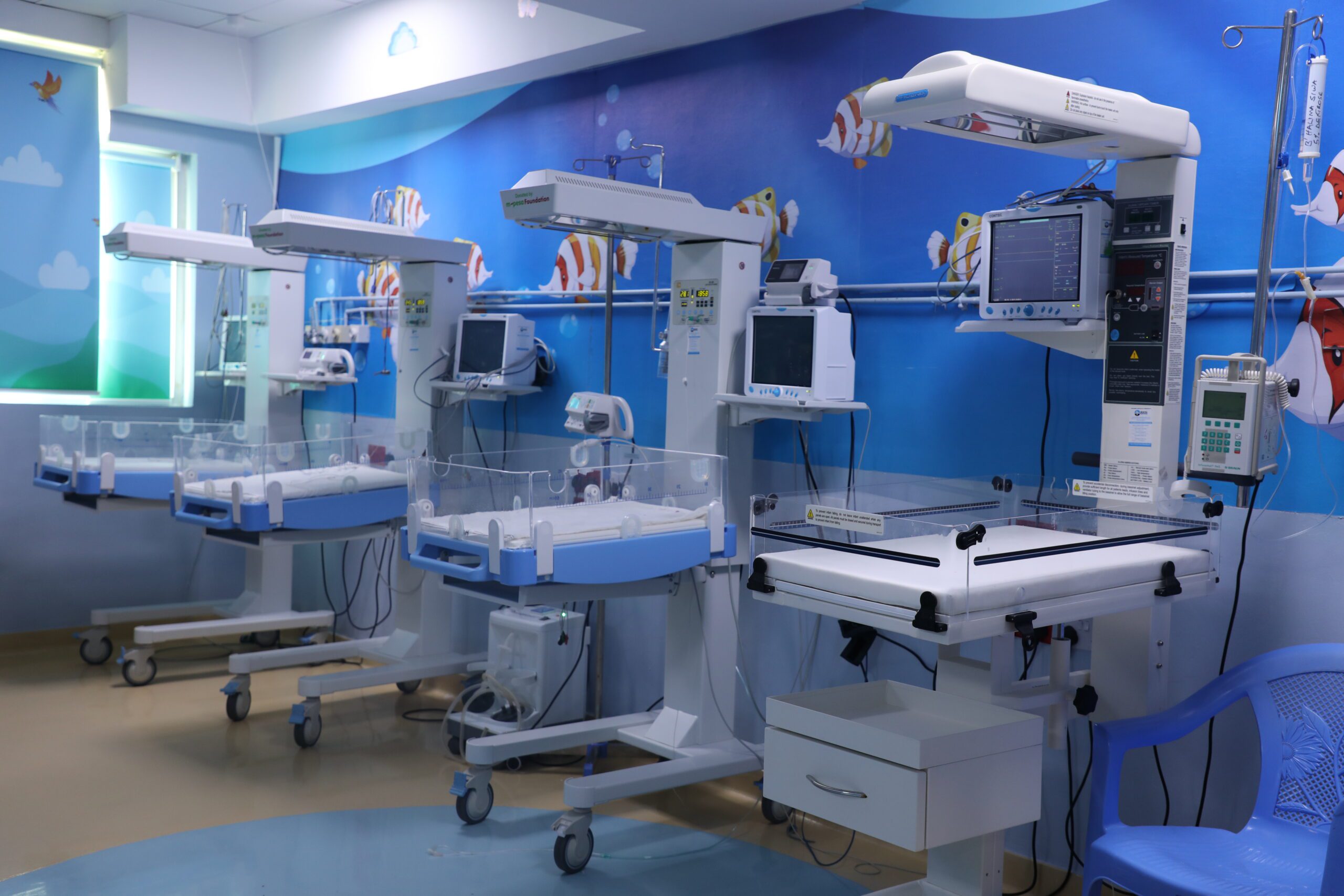
In a dimly lit room at Msambweni County Referral Hospital once sat a rusted, salt-worn incubator, a fragile cradle of hope in a ward that had seen too much loss. For years, the incubator bore the weight of mothers’ prayers and nurses’ determination to save lives. Between 2022 and 2024, the facility recorded 123, 140, and 160 neonatal deaths respectively, the highest in Kwale County.
Msambweni, the county’s largest referral hospital, struggled under the burden of limited space, aging and limitedequipment, and overstretched staff.
Recognizing the rising neonatal deaths, Amref Health Africa, through the USAID Stawisha Pwani project, partnered with the hospital to strengthen maternal and newborn health care. The first step was lifesaving equipment: three incubators, resuscitators, and baby cots. Yet, the real transformation came when the partnership looked deeper: beyond equipment to systems, people, and capacity.
“Before, we had only nine unspecialised nurses in the newborn unit. Controlling infections like sepsis was nearly impossible, and many babies did not survive,” recalls Richard Kimanzi, a neonatal nurse.
“Now, with dedicated space, running water, trained staff, and piped oxygen, outcomes have changed. Deaths from sepsis have drastically reduced, and as nurses, we finally feel proud of the care we provide.”
Through USAID Stawisha Pwani, Amref supported mentorship, Continuous Medical Education (CMEs), and data-driven quality improvement. The team also trained twelve nurses in paediatric care and one in neonatal intensive care, building a new generation of skilled caregivers determined to rewrite the story of newborn survival in Kwale.
For Hanifa Marora, the Nurse Service Manager, the impact is visible across the entire maternity wing:
“Through Stawisha Pwani, we’ve seen improvements in infrastructure, staffing, and mentorship. Our bed capacity has grown from 25 to 40. But to maintain high standards, we need continued training, benchmarking with facilities like Coast General, and investment in a maternity theatre to handle emergencies.”
The power of those partnerships became clearer when Amref supported the hospital to develop a proposal to the Safaricom Foundation, which funded a Ksh 62 million state-of-the-art Newborn Unit. Today, Msambweni’s NBU boasts 17 baby cots, 15 resuscitators, and a clean, well-ventilated space with running water, a far cry from the congested, infection-prone ward it once was.
Facility Director, Francis Ndiege, underscores how Amref’s approach goes beyond service delivery to institutional strengthening:
Mentorship has helped us improve on records management and data use for decision-making. We’ve identified gaps, allocated resources better, and increased revenue from KSh 35 million in 2022 to KSh 100 million today. Data has transformed how we plan, budget, and sustain progress.”
Msambweni Hospital now has an operational oxygen ecosystem, shifting from cylinder dependence to piped oxygen, made possible through both USAID Stawisha Pwani and the Amref Global Fund project. The result is faster, more reliable oxygen delivery for mothers and newborns in critical condition.
Driving the MNH Big Bet
The success in Kwale is part of Amref’s Maternal and Newborn Health (MNH) Big Bet, which seeks to reduce maternal mortality from 355 to below 70 deaths per 100,000 live births, and neonatal deaths from 21 to under 12 per 1,000 live births by 2030.
The collaboration between the County Government of Kwale, USAID Stawisha Pwani, and the Safaricom Foundation, Msambweni has become a model for what is possible when funders and implementers unite behind a common goal: ensuring every mother and newborn everywhere (#EWENE) not only survives, but thrives.
The once rusted incubator in Msambweni no longer symbolizes despair, it stands as a reminder of resilience, partnership, and progress. Every newborn who takes a first breath in the new unit is proof that collaboration works.
Amref’s Strategic Impact
The Global Fund’s COVID-19 Response Mechanism (C19RM), in partnership with Amref Health Africa, has significantly strengthening Kenya’s medical oxygen infrastructure to improve the country’s capacity to respond to ongoing and future health challenges. Through this project, Kenya has achieved significant milestones in expanding oxygen production, improving distribution, and upgrading its healthcare infrastructure. The project also aims to contribute to the broader goal of achieving Universal Health Coverage (UHC).
The USAID Stawisha Pwani is a 5-year program funded by the President’s Emergency Plan for AIDS Relief (PEPFAR) through the US Agency for International Development (USAID) to increase the use of quality county-led health services in four Coastal counties of Kilifi, Kwale, Mombasa and Taita-Taveta. The aim of the program is to strengthen county health systems with a focus on HIV Prevention & Treatment, Family Planning, Reproductive, Maternal, Child and Adolescent Health (FP/ RMNCAH) and Nutrition. The program supports the four county governments toward sustainability in quality and systems of health services.
Author: Nyambura Gitonga, Communications Specialists, FRH, Programme, Amref Health Africa in Kenya