
By: Nyamanya Susan, ECD Programme Officer, Fidelina Ndunge, ECD Lead, Amref Health Africa
Background
UNICEF’s State of the World’s Children 2024 offers a powerful vision for the future of childhood amid global change. Three megatrends—demographic shifts, environmental crises, and breakthrough technologies—are rapidly reshaping young lives. These forces bring both daunting challenges and exciting opportunities, demanding urgent, united action to protect every child’s rights and well-being. As we continue reflecting on the state of World’s Children and the recently commemorated World Children’s Day with the theme ‘My Day. My Rights, the challenge is clear: we need to act boldly to ensure every child’s voice, rights, and dreams are protected in this new era!
World Children’s Day is not simply a celebration—it’s a global rallying call for children’s rights. Despite progress, millions of children continue to endure injustice and exclusion, blocking their access to education, healthcare, and safety. For organisations like Amref Health Africa in Kenya that champion holistic well-being, this year’s theme underscored our deep commitment to fairness and inclusion for every child.
Equity and Belonging: Children Are Born to Belong—Responsive Care is Essential
From their very first moments, children are driven to connect. They seek faces, tune in to voices, and instinctively reach out to interact. These daily exchanges; smiles, words, gestures aren’t just touching; they are the critical building blocks of healthy brains.
Harvard’s Centre on the Developing Child calls this process “serve and return”: when a child babbles or points (the serve) and an adult responds with eye contact or words (the return). Each back-and-forth exchange strengthens brain architecture, laying the foundation for learning, emotional health, and resilience.
When caregivers respond with warmth and consistency, children thrive. Without this, stress can disrupt healthy development. Inclusion and responsive care are not optional extras—they are vital for building strong brains and brighter futures. No app or device can ever replace the transformative power of human connection.
Discrimination whether based on skin colour, disability, or any other factor robs children of opportunity and dignity. We must dismantle these barriers now and create a world where every child has a genuine chance to succeed.
Kenya’s legal environment vehemently prohibits discrimination against children. Article 53 of the Constitution of Kenya, 2010, guarantees a child the right to education, health, nutrition, parental care, and protection from abuse, neglect, harmful cultural practices, and all forms of violence, with the child’s best interests as paramount in every matter concerning the child. In a similar vein, the Children Act 2022 reinforces these principles, explicitly providing for non-discrimination (Section 9) and protecting the rights of children with disabilities by ensuring they are accorded equal treatment with dignity.
These laws make it clear: inclusion is not a choice; it is a legal and moral duty. We must fight prejudice, celebrate diversity, and build a society where every child can truly thrive.
Children’s Voices Matter: Participation is a Right, not a Privilege
Listening to children is not optional; it is a fundamental right, protected under the United Nations Convention on the Rights of the Child (UNCRC), especially Article 12. Every child has the right to freely express their views in all matters that affect them.
This principle demands more than token consultation. Policies and programmes must actively reflect children’s perspectives—children are not merely recipients; they are the architects of tomorrow. True participation makes decisions more inclusive, relevant, and attuned to the real needs and dreams of children. When we empower children’s voices, we strengthen democracy, foster accountability, and help shape a future that genuinely belongs to them.
Counterarguments
Play is a Right, not a Luxury
World Children’s Day may be behind us, but its message endures. While we celebrate progress in advancing children’s rights, millions especially those aged 0–3 in refugee and vulnerable communities still see their right to play overlooked. Article 31 of the UN Convention on the Rights of the Child guarantees every child the right to rest, leisure, and play. Yet in reality, play continues to be treated as a luxury rather than a necessity.
Play is not a luxury—it is essential for cognitive development, emotional resilience, and social skills. For children facing adversity, play is a lifeline—easing stress, promoting healing, and inspiring hope.
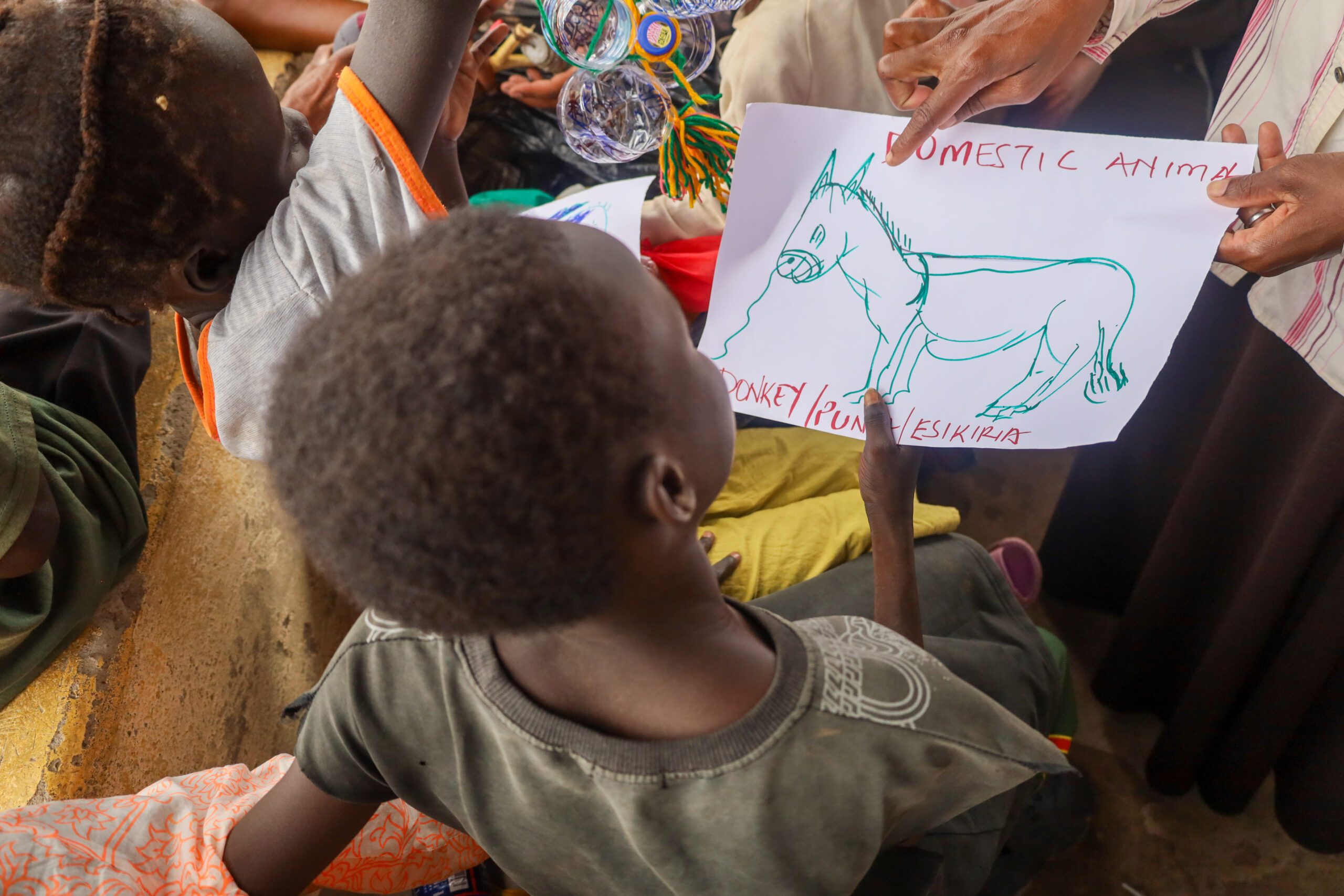
Amref’s ECD Initiatives is changing this narrative by integrating play into early childhood care through caregiver support circles offering Mental Health and Psychosocial Support (MHPSS) and Social Emotional Learning (SEL), Community dialogues, and health talks that integrate play and communication activities alongside group play sessions for children 0-3 and their caregivers.
World Children’s Day may have passed, but the call to action remains. Governments, donors, and communities must continue investing in play-based interventions for the youngest and most vulnerable. Protecting the right to play is not just about childhood; it’s about safeguarding our collective future.
Children’s Rights: The Bedrock of Economic Growth
Some claim that inclusion is expensive or culturally difficult. The evidence says otherwise: inclusive societies are more peaceful, resilient, and economically successful. Investing in children’s rights is not just morally right—it’s the smartest economic move we can make. Economist James Heckman’s research shows that every dollar invested in high-quality early childhood development can yield up to $13 in long-term benefits through improved education, health, and productivity. Inclusion is not a cost; it’s an investment in a better, sustainable future.
This is not an issue of choice; it is a binding legal and moral commitment. Article 53 of the Constitution of Kenya, 2010, provides that every child has the right to education, health, nutrition, parental care, and protection from abuse and harmful cultural and customary practices; and the child’s best interests are the paramount consideration in all actions concerning the child. Similarly, the Children Act, 2022, reinforces these rights, besides asserting non-discrimination, participation, and protection against exploitation, thereby aligning Kenya’s laws with international standards under the UNCRC. These frameworks jointly demand equity and inclusion for all children.
From Survival to Success: How Primary Health Care Can Drive the Right to Thrive
Significant improvements on child development outcomes have been made specifically good health and nutrition in Kenya. Under five mortality rates dropped from 90 to 41 per 1,000 live births since 1989 to 2022 (KDHS), but disparities continue to persist across counties. 18% of children under five were stunted in 2022, with higher prevalence in rural areas a significant reduction from 26% in 2014 (KDHS). Seventy eight percent of children are developmentally on track in health, learning and psychosocial well-being (KDHS 2022).
With all these efforts to ensure child survival, little has been done to ensure that they thrive, and their rights upheld holistically. Twenty four percent of children under five lack birth registration (UNICEF, 2025), posing challenges in access to social services. Lack of data on responsive caregiving, early stimulation and playthings at home compounds the policy formulation, planning and implementation gaps experienced in the country. Primary Health Care provides opportunities for reinforcing responsive caregiving, strengthening linkages to opportunities for early learning including integrating play at health facilities, community and home, safety and security and promoting child developmental monitoring and counselling thus upholding the rights of children in their early years.
Collaboration for Sustainable Impact in Early Childhood Development
Sustainability in early childhood development (ECD) is not achieved through short-term interventions; it is built through strategic collaboration and local ownership. This principle drives our ECD programs where projects are designed to strengthen nurturing care and mental health support by leveraging existing community and government structures.
From the outset, our approach has been government-led and community-driven, ensuring that local systems are equipped to sustain impact well beyond the project’s lifespan. Through co-development and co-implementation, we have embedded ECD solutions within county structures, fostering ownership and resilience.
Our initiatives are driving measurable improvements in child development outcomes as reflected in KDHS, such as: higher exclusive breastfeeding rates for infants under six months, improved immunization coverage among children aged 12–23 months, enhanced Early Childhood Development Index (ECDI) scores, capturing cognitive, social-emotional, and physical development for children aged 36–59 months, and greater access to antenatal and skilled birth care, strengthening maternal and newborn health. These gains are achieved through our Social and Behavior Change Communication (SBCC) strategies, which empower caregivers and communities to adopt nurturing care practices.
Beyond these indicators, we are fostering ecosystem changes by strengthening multisectoral coordination, integrating mental health into ECD services, and building capacity within local governance systems. The co-creation model demonstrates that when collaboration forms the foundation, sustainability becomes the outcome and communities thrive
Call to Action:
We call upon Governments, organizations, communities, and individuals to jointly end discrimination, amplify children’s voices, and build a safe place for all children. Amref is focusing on building trusted collaborations in the Early Childhood Development Program to promote Nurturing Care, uphold the rights of all children and ensure that they not only survive but thrive!
Edited by: Noah Wekesa, Communications Specialist, Amref Health Africa