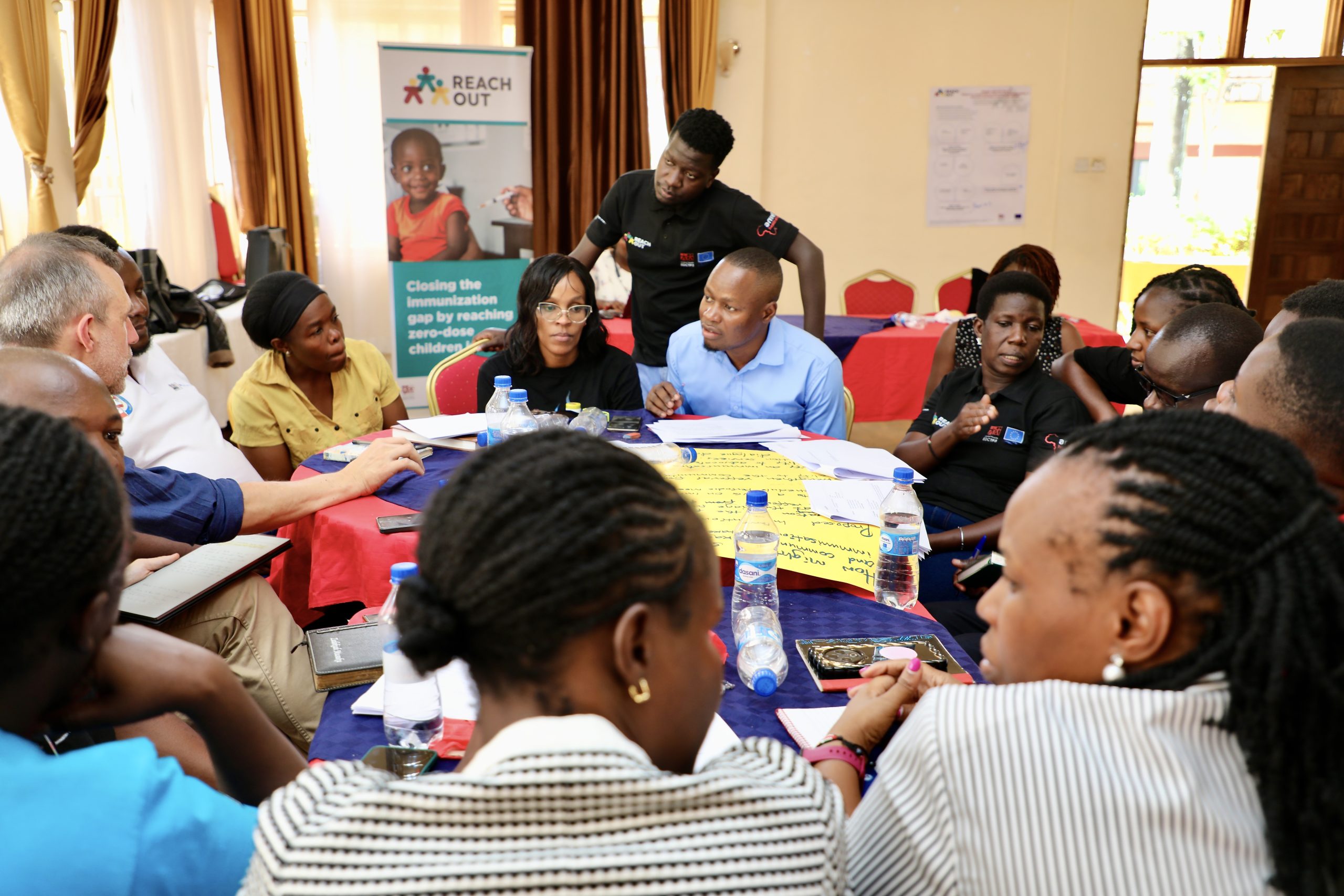
The REACH-OUT Project held a dynamic two-day co-creation workshop in Busia County, bringing together National and County Stakeholders. Building on insights from the initial workshop (phase 1 – co-creation and result dissemination), participants worked together to turn the most pressing immunisation challenges into practical, evidence-driven interventions for real-world evaluation. This collaborative environment empowered stakeholders to design impactful solutions that blend community perspectives with health system priorities.
The workshop opened by re-engaging participants with evidence gathered during the first co-creation session. Through lively discussions and an interactive barrier gallery walk, attendees explored key demand and supply-side barriers and their root causes. Rather than questioning the barriers themselves, stakeholders focused on where the findings pointed for targeted interventions, setting the stage for action.
With the priority barriers confirmed, participants moved on to craft “How Might We” (HMW) statements. In diverse groups, they transformed these barriers into inspiring, opportunity-focused questions that sparked creative thinking rooted in local realities. Guided by a structured HMW framework and quality criteria, groups crafted and refined statements directly tied to the key challenges, opening up space for a wide range of innovative solutions. These HMW statements became the launchpad for collaborative intervention design, turning obstacles into opportunities for shared innovation.
Ready with their HMW statements, participants entered a creative phase, designing interventions to tackle the identified barriers. Using structured worksheets and Theory of Change principles, each group co-created a variety of intervention ideas, ensuring that proposed solutions reflected the lived experiences of caregivers, health workers, providers, and managers. Rather than settling on favourites, the focus remained on reimagining immunisation services to boost access, quality, and equity, while keeping solutions practical for real-world adoption.
The workshop then focused on selecting the most promising interventions for implementation. Teams presented their concepts, which were individually scored against clear criteria: reach, impact, acceptability, and sustainability. Through open discussion and consensus-building, each group developed a prioritised shortlist. These interventions were mapped onto an Impact-Feasibility Matrix, sparking honest conversations about balancing health impact with practical implementation. This transparent approach ensured the final package was both innovative and achievable, truly reflecting the collective priorities of all stakeholders. The workshop concluded with a shared commitment to advancing evidence-based interventions that will shape the next phase of the REACH-OUT Project, driving progress toward equitable childhood immunisation.
Author: Noah Wekesa Wanjala, Yvonne Opanga and Joan Mmboga – Amref Health Africa