
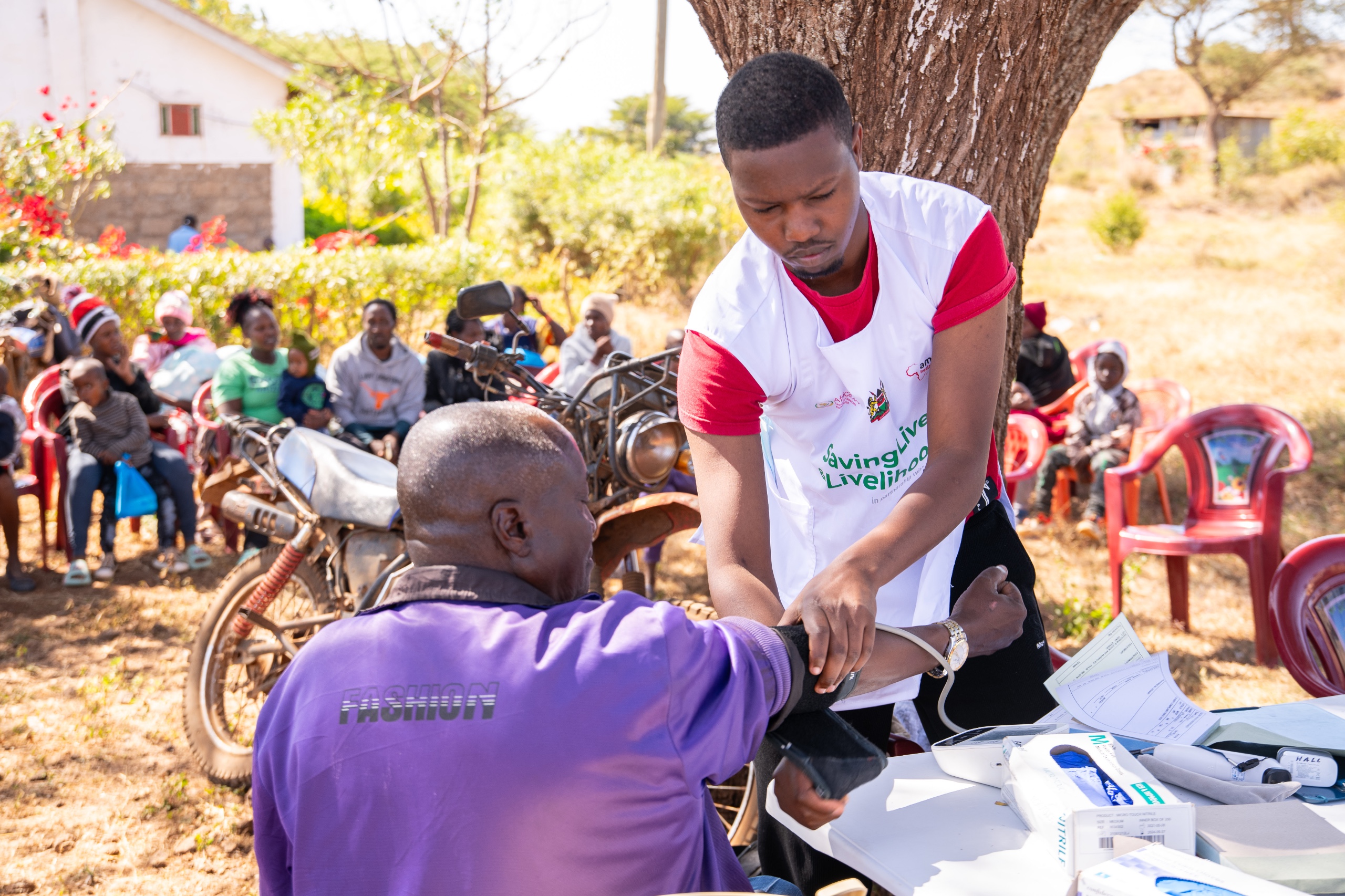
Nairobi, Kenya — 28 April 2026: A major initiative to confront one of Africa’s fastest-growing yet least visible health threats was launched today at the sidelines of the World Health Summit Regional Meeting in Nairobi, as Amref Health Africa in partnership with the Novo Nordisk Foundation announced the expansion of the Partnership for Education of Health Professionals (PEP) across East Africa with a US$13.2 million commitment, marking a major step forward in addressing cardiometabolic diseases (CMDs).
The expansion, implemented by Amref Health Africa in partnership with regional and global collaborators, builds on a two-year scoping and co-creation phase of the PEP programme, which demonstrated that transforming health professional education is both possible and urgent. During this phase, institutions across the region identified critical gaps in cardiometabolic disease training, strengthened faculty capacity, and piloted digital and blended learning approaches, including new CMD-focused courses delivered through online platforms. These early investments not only revealed the scale of the challenge but also validated practical, scalable solutions, now being expanded to reach more institutions, educators, and frontline health workers across Kenya, Uganda, Tanzania, and Ethiopia.
The three-year programme will support 55 training institutions to better prepare health workers to prevent and care for CMDs, conditions such as cardiovascular disease and diabetes that, together with other non-communicable diseases, account for about 40% of all deaths in East Africa.
While global health efforts have long focused on infectious diseases, a quieter but far-reaching shift is underway. Across East Africa, CMDs such as cardiovascular disease and diabetes are rising rapidly, placing growing pressure on health systems that were not designed to respond to this new reality. At the centre of this challenge is a critical gap: the way health professionals are trained has not kept pace with the changing disease burden. Training institutions, where the future health workforce is shaped, often operate with outdated curricula, limited digital infrastructure, and insufficient practical training tools. This leaves many frontline health workers underprepared to detect, prevent, manage, and care for CMDs that are now among the leading causes of death. Without urgent action, this gap risks widening inequities and increasing the long-term burden on already strained health systems.
“To address the increasing burden of NCDs / CMDs and associated inequities in health, we need to invest in the institutions educating the future health workforce,” said Prof. Flemming Konradsen, Chief Scientific Officer at the Novo Nordisk Foundation. “Through a long-term institutional development approach, the PEP programme will strengthen teaching, research, and clinical leadership capacity to equip the next generations of nurses and other health professionals with the competencies needed to prevent and care for cardiometabolic diseases more effectively.”
The programme takes a system-wide approach to addressing this gap by strengthening health professional education as a core driver of better health outcomes. It focuses on integrating CMD prevention and care into curricula, building faculty capacity, expanding access to digital and simulation-based learning, and strengthening research and leadership within training institutions.
Over the next three years, the programme will train more than 28,500 health professionals, including faculty, clinical mentors, nurses, and clinicians, and reach over 72,800 students across participating institutions. It will also establish 12 Centers of Excellence that will serve as regional hubs, supporting 43 additional institutions through a hub-and-spoke model designed to extend high-quality training, mentorship, and learning resources to underserved areas.
Innovation is central to the programme’ s approach. By leveraging AI-enhanced digital pedagogy, simulation-based training, and mobile-enabled online and blended learning platforms, PEP aims to make health education more accessible, practical, and responsive to real-world healthcare challenges, including in remote and resource-limited settings.
A strong emphasis on equity underpins the programme’ s design. Through its regional model, training and mentorship will extend beyond urban centers into rural and underserved communities, where shortages of skilled health workers are most acute and where the burden of CMDs is increasingly felt. This ensures that improvements in education translate into better prevention, early detection, and care for those most at risk.
“The rising burden of cardiometabolic diseases on the continent demands urgent, African-led action. This investment recognises that strengthening health education is not an add-on to health systems strengthening, but the very foundation of resilient systems,” said Dr Githinji Gitahi, the Group CEO of Amref Health Africa. “By investing in institutions and frontline professionals, we are building the capacity to deliver quality, equitable care at scale and ensuring that the communities most at risk are not left behind.”
Beyond training, the PEP programme is also investing in long-term leadership and knowledge generation. Four PhD candidates, one from each participating country, will be supported in Health Professions Education through partnerships with the University of Copenhagen and Amref International University. Faculty across institutions will receive mentorship in education and implementation research, strengthening their ability to generate evidence and translate it into policy and practice. A strong gender equity component will further promote leadership opportunities, mentorship, and career advancement for female health professionals.
By embedding these changes within universities, middle-level training colleges, and national systems, the programme is expected to ensure that improvements in health professional education are sustained beyond the life of the grant. Over time, this is expected to strengthen the region’s ability to respond not only to CMDs but to a broader range of emerging health challenges, contributing to more resilient and equitable health systems across Africa.
Notes to the Editors:
About Amref Health Africa
Amref Health Africa, headquartered in Kenya, is the largest Africa-based international health and development organisation providing training and health services to over 20 million people annually in at least 30 countries in Africa. Amref Health Africa continues to evolve and innovate the approaches to increase sustainable health access among communities.
Amref manages a full range of medical and public health programmes tackling the most critical health challenges facing the continent – including global health emergencies, communicable and non-communicable disease, neglected tropical diseases, maternal and childcare, as well as water, sanitation and climate change. Much of our credibility with local communities and African governments stems from the relationship and trust that we have built over the past 69 years. Our subsidiaries include Amref Flying Doctors and the Amref International University.
About the Novo Nordisk Foundation
Established in 1924, the Novo Nordisk Foundation is an independent Danish enterprise foundation with philanthropic objectives. The vision of the foundation is to improve people’s health and the sustainability of society and the planet. Through grants and philanthropic investments, it supports research, innovation, education and development initiatives that seek to address major societal challenges.
The foundation views the global escalating burden of cardiometabolic diseases as a pressing health issue but also as an equity concern. Thus, the Foundation supports activities that contribute to early prevention through enhanced food security, building disease understanding, improving clinical care and ensuring equitable access to prevention and care, including for people in vulnerable positions. Visit www.novonordiskfonden.dk
Media Contacts
- Maureen Cherongis, Amref Health Africa: [email protected] (+254721178827)
- Novo Nordisk Foundation, Nils Eskestad, [email protected]