
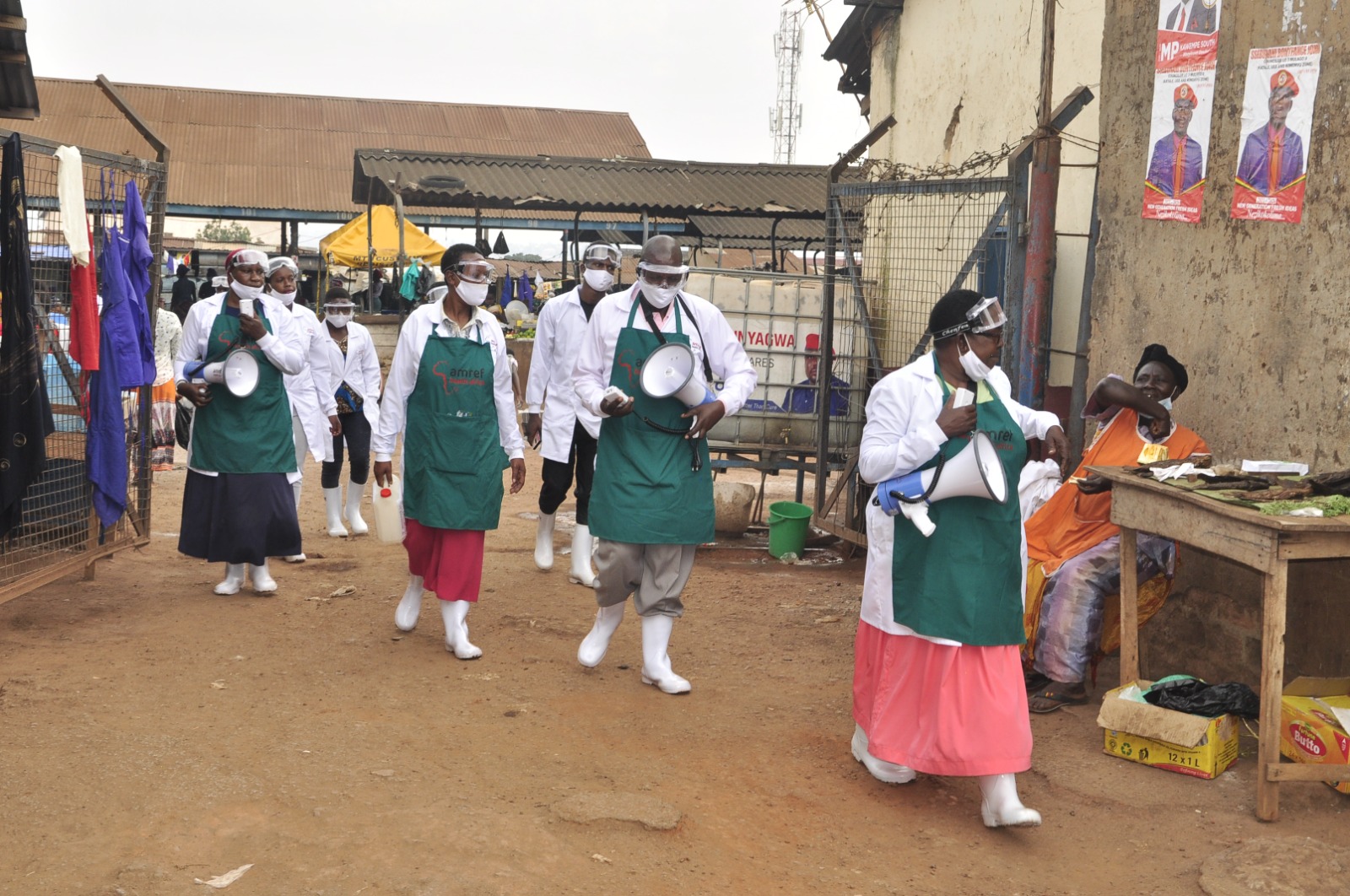
When an Ebola outbreak was confirmed in eastern Democratic Republic of Congo in May 2026, alarm bells quickly sounded across the region.
For Uganda, the threat was immediate. Every day, thousands of traders, refugees, families, and transporters cross the porous border between the two countries, sustaining livelihoods but also increasing the risk of disease transmission. Within hours of confirmation of the outbreak, Uganda activated its preparedness and response systems, recognising that preventing Ebola from spreading would require more than medical treatment alone. It would require strong surveillance, trusted communities, coordinated leadership, and resilient health systems.
This is where Amref Health Africa is stepping in.
Working alongside the Government of Uganda, district authorities, refugee agencies, and health partners, Amref is supporting preparedness efforts in some of the country’s most vulnerable border communities, helping strengthen the systems needed to detect, prevent, and respond to Ebola before it spreads.
Protecting Communities at the Frontline
Uganda’s northwestern districts sit at the crossroads of regional movement between Uganda, the Democratic Republic of Congo, and South Sudan. These border areas are critical for trade, humanitarian operations, and refugee protection, but they are also among the most vulnerable to cross-border disease transmission.
Amref is supporting preparedness activities across six high-risk Points of Entry in Arua City, Arua District, and Koboko District, while strengthening surveillance and community engagement in four priority districts: Arua City, Arua District, Koboko District, and Terego District.
Particular attention is being given to Rhino Camp Settlement in Terego District, one of Uganda’s largest refugee-hosting areas. Through support to Ofua Health Centre II, which serves more than 10,000 refugees and surrounding host communities, Amref is helping strengthen disease surveillance, risk communication, and community preparedness in an area where early detection can make the difference between containment and crisis.
To support these efforts, 40 Village Health Teams have been mobilised to conduct community sensitisation, rumor tracking, surveillance, and referral of suspected cases among both refugee and host populations.
Strengthening Uganda’s First Line of Defence
Experience from previous Ebola outbreaks has consistently shown that communities are often the first to recognise unusual illnesses. Long before laboratory confirmation is available, trusted community networks provide critical early warning signals that can help stop outbreaks from spreading.
Amref’s response therefore focuses on strengthening the pillars that underpin effective preparedness:
- Community engagement and risk communication to combat misinformation and promote protective behaviours.
- Community-based surveillance and early detection systems.
- Infection prevention and control measures for frontline health workers.
- Border health surveillance and screening.
- Coordination, monitoring, and support to district response structures.
These investments are designed not only to protect communities today but also to strengthen long-term resilience against future health threats.
Supporting National Leadership
Amref’s contribution extends beyond frontline implementation.
Technical experts from Amref are actively supporting Uganda’s national Ebola response architecture across key pillars including Risk Communication and Community Engagement (RCCE), Surveillance, Case Management, Coordination, Partnerships, Monitoring and Evaluation, and Research.
By embedding technical expertise within government-led response structures, Amref helps ensure that local interventions are aligned with national priorities while contributing lessons drawn from decades of outbreak preparedness and response across Africa.
Building on Decades of Health Security Experience
The current Ebola outbreak is not Amref’s first experience responding to emerging health threats.
For decades, the organisation has worked alongside governments and communities to strengthen preparedness and response systems for Ebola, Marburg, cholera, COVID-19, mpox, and other public health emergencies.
This experience has demonstrated a simple but powerful lesson that outbreaks are most effectively contained when communities trust health systems, surveillance systems detect threats early, and health workers have the tools and training they need to respond rapidly.
The current response in Uganda reflects this same philosophy of investing in preparedness before cases escalate.
A Shared Responsibility
Diseases do not respect borders. Protecting communities from Ebola requires collective action from governments across the world, health workers, humanitarian agencies, donors, and communities themselves.
By supporting border surveillance, community engagement, health workforce preparedness, and refugee health services, Amref Health Africa is helping strengthen Uganda’s ability to prevent, detect, and respond to Ebola while safeguarding some of the region’s most vulnerable populations.
Article by Lilian Kamanzi Mugisha and Erick Achola