
When the fire broke out at Utumishi Girls School, it changed lives in an instant. Young students sadly lost their lives. Hundreds of learners watched in horror as the tragedy unfolded. Families rushed to the school desperate for news of their children. Teachers, support staff, emergency responders, and the wider community were left grappling with shock, grief, and unanswered questions.
As rescue efforts continued and the nation mourned, there was a huge responsibility of helping those affected begin the difficult journey of healing.
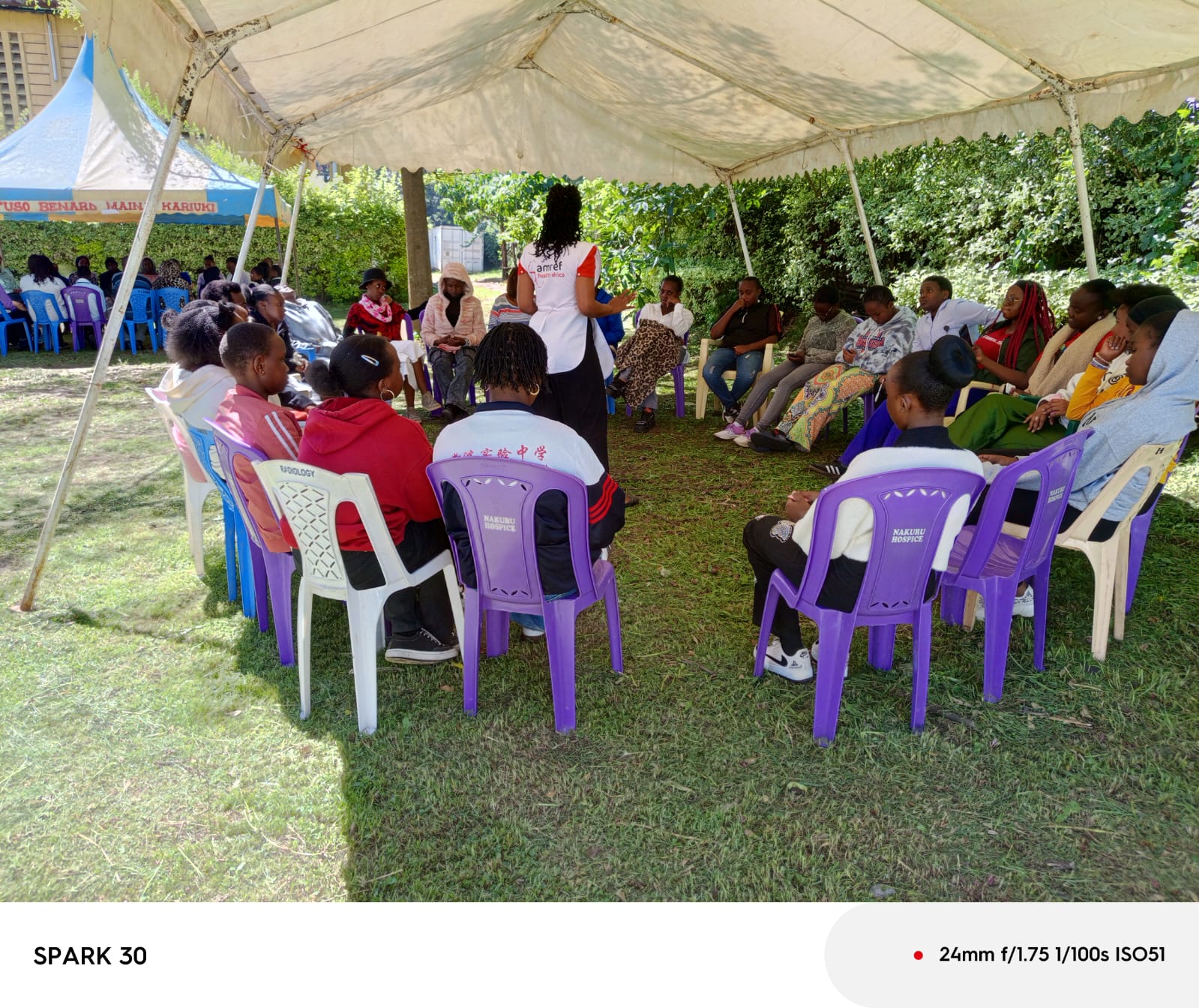
In the days that followed, Amref Health Africa, through Project THRIVE, joined county-led emergency response efforts to provide mental health and psychosocial support to students, families, teachers, support staff, and community members affected by the tragedy.
Working under the leadership of the County Director of Public Health, Ms Elizabeth Kiptoo, mental health specialists and counsellors were rapidly deployed to offer Psychological First Aid and create safe spaces where survivors and families could talk about their experiences, process their emotions, and begin coping with the trauma.
“Tragedies like the Utumishi fire often leave invisible wounds,” said Ms Kiptoo. “Supporting mental health is just as important as addressing physical injuries. We are grateful to Project THRIVE and Amref Health Africa for helping ensure that affected individuals and families received the care and support they needed during this difficult time.”
For many families, simply having someone willing to listen made a difference.
Grace Njeri, a parent whose daughter survived the fire, recalls the fear and helplessness she felt in the aftermath.
“After the fire, my daughter was terrified and kept reliving what had happened,” she said. “As a parent, I felt helpless. The counsellors took time to listen to us, helped us understand that our reactions were normal, and reminded us that we were not alone. Their support gave us hope and helped my daughter begin to feel safe again.”
According to Lydia Nyagah, the County Mental Health Coordinator, emergencies affect far more than people’s physical safety.
“Trauma can have lasting effects if left unaddressed,” she explained. “Early psychosocial support helps people regain a sense of safety, reduce distress, and build the strength they need to cope with what they have experienced.”
The support extended beyond students and families. Emergency responders, teachers, and community members who witnessed the tragedy also received counselling and psychosocial support.
“Many first responders carried a heavy emotional burden after witnessing the incident,” said psychologist Charles Wafula. “Before people can begin to rebuild their lives, they often need help processing the shock, grief, and uncertainty they are carrying.”
While recovery will take time, the response has reinforced an important lesson that mental health support must be part of every emergency response. The emotional impact of a tragedy can last long after the physical damage has been repaired.
As the Utumishi community continues to heal, the collective efforts of families, health workers, counsellors, and community leaders are helping restore hope. In moments of profound loss, compassionate support can make the difference between carrying trauma alone and beginning the journey toward recovery together.
Author: Billian Sawenja, Project Officer, Project Thrive, Amref Health Africa in Kenya