

In the quiet village of Kunthembwe, in the southern part of Malawi, Malita Charles starts her day before sunrise. By the time the rooster crows, she’s already up, preparing breakfast for her five other children. She and her husband do small jobs, such as farming and piecework, to make ends meet.
For a long time, accessing healthcare was a major struggle. The nearest clinic was more than two hours away on foot. Malita remembers how hard it was.
“I used to leave home at 6 a.m. and arrive at the hospital around 9:30,” she says. “The lines were long. I would wait the whole day just to be helped. It was exhausting. And when I was too tired or sick to walk, I had to hire a bicycle taxi, which cost too much.”
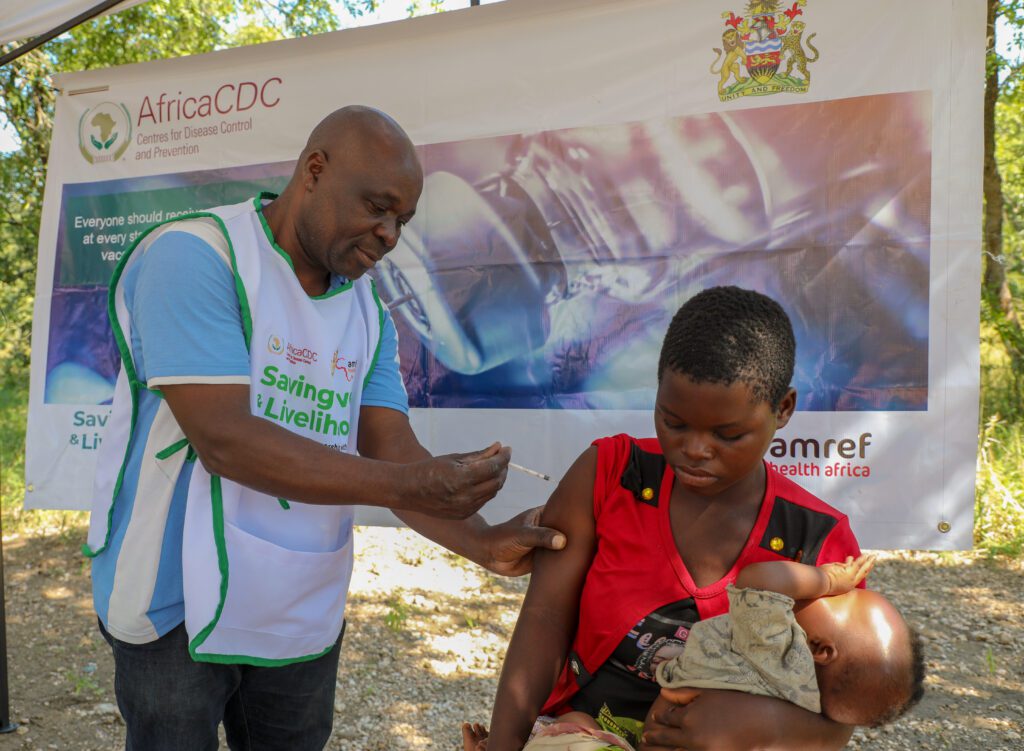
But things changed in April 2025. That’s when outreach clinics started operating in her area through the Africa CDC Saving Lives and Livelihoods (SLL) project, in partnership with Mastercard Foundation, implemented by Amref Health Africa.
In Malawi, the second phase of the SLL project integrates COVID-19 vaccines into other vital health services, including Reproductive, Maternal, Neonatal, and Child Health (RMNCH), HIV/AIDS care, Tuberculosis (TB) management, Non-Communicable Diseases (NCDs) management, malaria, and nutrition, through outreach clinics in underserved communities. The approach promotes life-course immunisation, emphasizing that vaccines are essential not only for children but also throughout every stage of life.
The aim is to reach over 1 million people across Malawi in this phase, with at least 96,000 adults vaccinated, while building a system that ensures people receive the immunisations and care they need at every stage of life.
For Malita, this change has brought real relief. “I don’t have to choose between going to the clinic and working to feed my children,” she says. “Now the clinic comes here. We can get the services we want, as well as get vaccinated on time, and still go to work.”
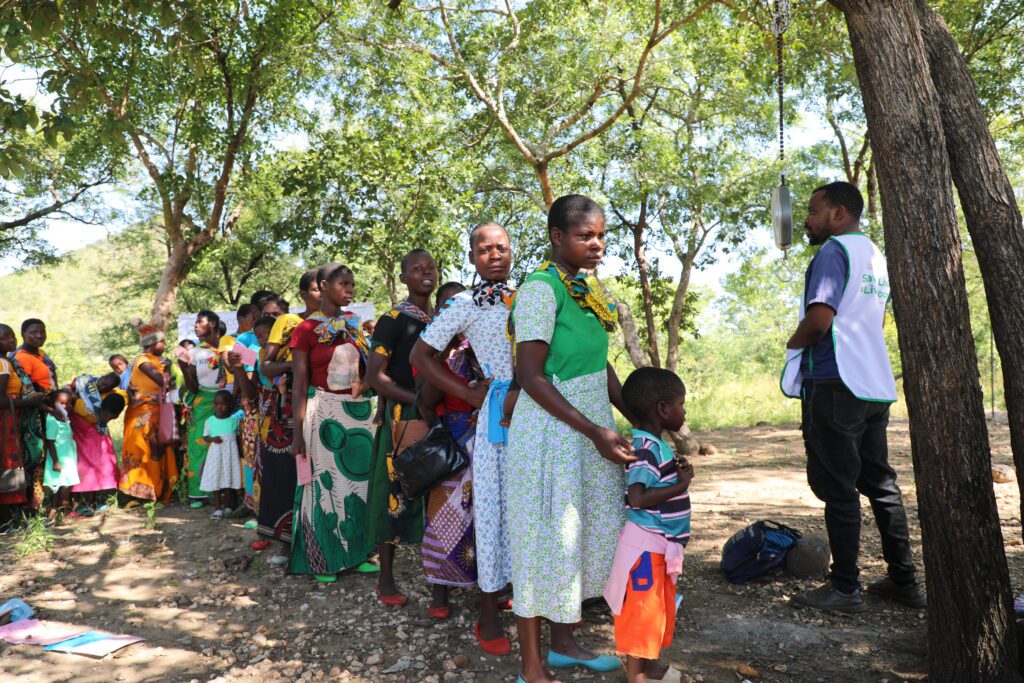
The outreach team, led by Nurse Chimwemwe Pakhale from Chabvala Health Centre, serves over 3,000 people in the area. During one recent clinic, 34 women received tetanus shots, 58 got family planning services, and five attended their first antenatal visits. More than 200 children attended growth monitoring services, received vaccinations, and were treated for common illnesses, including malaria. Over 170 adults received treatment, and 89 people got tested for HIV.
Enelesi Lusaka, another mother in the village, agrees with Malita. She remembers how hard it used to be to get her children vaccinated on time.
“Vaccines protect me and my child from dangerous diseases,” she says. “Before, it was so hard to travel to the clinic and we sometimes missed doses. Now, with the outreach clinic coming here, I know my child will get vaccines on time, and I will also get vaccines on time. It gives me peace of mind.”
The clinic has done more than improve access to healthcare; it has brought relief to the people of Kunthembwe in Blantyre. Families no longer need to walk for hours or spend money they don’t have to see a health worker. Children are getting vaccinated on time, mothers are receiving care during pregnancy and vaccines, and more people are staying healthy.
“We feel seen,” Malita says. “Before, it felt like we were forgotten. Now, the health workers come to us,” she says with a smile. For Malita, each day now begins with a little less worry and a lot more hope.
By Lusayo Banda-Communications Manager, Amref Health Africa in Malawi