

When Ambuyeni Mwalwanda opened his barbershop that morning in Karonga, everything felt normal. He trimmed hair, chatted with customers, and looked forward to getting home early. But that night, things took a terrifying turn.
“I started vomiting and had diarrhea,” he recalls. “At first, I thought it was just something I ate. But I kept getting weaker.” His wife, alarmed by how fast his condition was deteriorating, rushed him to the hospital, where he was diagnosed with cholera, a disease that has haunted Malawi’s northern districts in the recent years.
Ambuyeni’s story mirrors the wider crisis that swept across Karonga in 2023, when Malawi faced its deadliest cholera outbreak. The case fatality rate soared to 5.79%, far exceeding global emergency thresholds. Chitipa and Karonga, two northern border districts, were severely affected, plagued by inadequate and unsafe water supplies, compromised sanitation and hygiene, and gaps in disease surveillance and response. Karonga recorded 68 cases and 7 deaths, while Chitipa’s Kapenda Health Centre faced 67 cases and 3 deaths during the outbreak’s peak.
A Bold Response Against Cholera
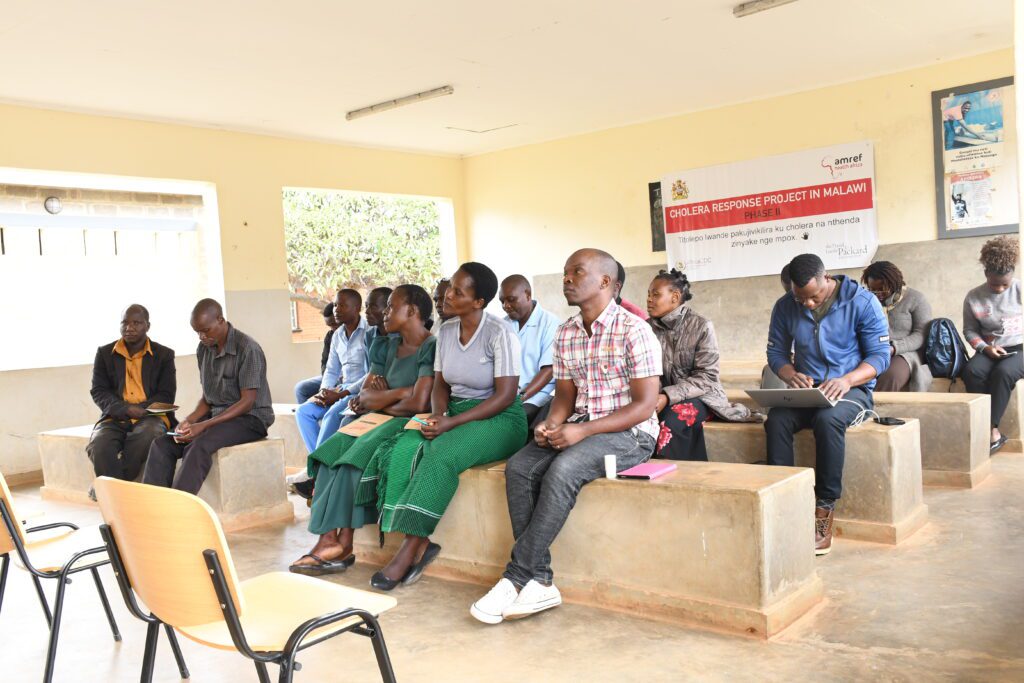
In response to the unfolding crisis, Amref Health Africa in Malawi, in collaboration with the Ministry of Health and Africa CDC, with funding from David and Lucile Packard Foundation, launched the Cholera Response Project. The goal of the project was to reduce the case fatality rate to below 1%, and prevent future outbreaks through targeted interventions, community education, and a stronger health system.
Across Chitipa and Karonga, the project trained 300 health workers, including nurses, environmental health officers, and Disease Control and Surveillance Assistants (DCSAs), in outbreak response, contact tracing, case management, and community engagement.
“We now know how to detect and manage cases. We can do surveillance, educate communities, and respond quickly,” says Elvin Mwaungulu, Kapenda Health Centre in-charge. Kapenda Health Centre now runs handwashing campaigns, distributes chlorine, and actively promotes hygiene education in its 18,820-person catchment area.
At Mwami Border Post in Chitipa, Senior Disease Control and Surveillance Assistant Justin Jere screens travellers and spreads awareness daily. With approximately 50 people reached every day, this frontline defence helps prevent cholera from crossing borders.
In Karonga, Lupembe’s health team is applying the same training to prevent a resurgence. “We have activated village health committees to check on sanitation, pit latrines, and water safety,” says the facility in-charge, Rodgers Mkuziwaduka. “We do contact tracing, disinfection, and work closely with rapid response teams to stop outbreaks in their tracks.”
From Patient to Advocate
Back in Karonga, Ambuyeni made a full recovery after two days in the hospital. But the experience changed him and his family for good.
“When I was discharged, they gave us chlorine and taught us how to prevent cholera,” he says. “Now, I make sure we wash our hands with soap every time, especially before my wife breastfeeds the baby.”
He actively shares cholera prevention messages with neighbours and his customers, helping to protect others from the disease that nearly claimed him.
A Future Without Cholera
The Integrated Disease Surveillance and Response (IDSR) Coordinator for Karonga, Raymond Jereni shares that the training and support from Amref Health Africa in Malawi through the Cholera Response Project has transformed how the district responds to cholera. “We were struggling with resources. But now, we have trained staff, proper systems, and the ability to share information fast. We are no longer just reacting, we are preparing.”
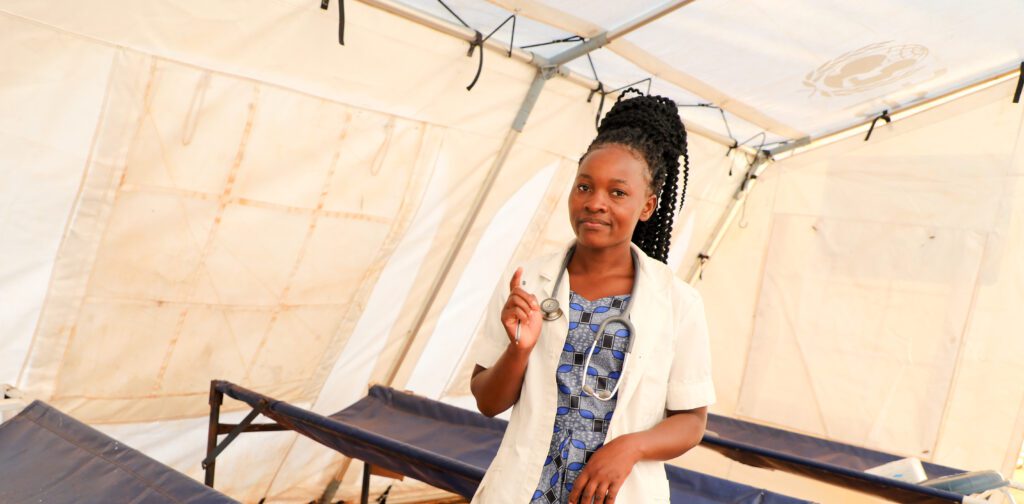
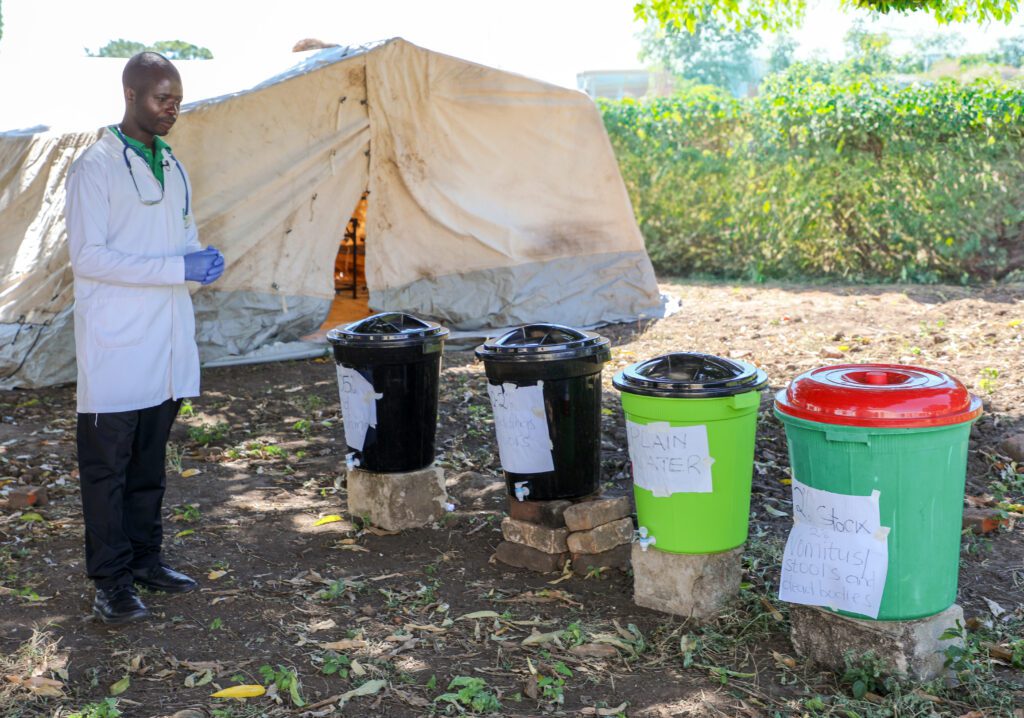
With hundreds of health workers trained and communities mobilised, the districts of Karonga and Chitipa are moving from crisis to control. The Cholera Response Project is more than just an emergency intervention. It’s part of Malawi’s long-term vision to interrupt cholera transmission, reduce fatalities, and eliminate cholera as a public health threat.
By Lusayo Banda-Communications Manager, Amref Health Africa in Malawi