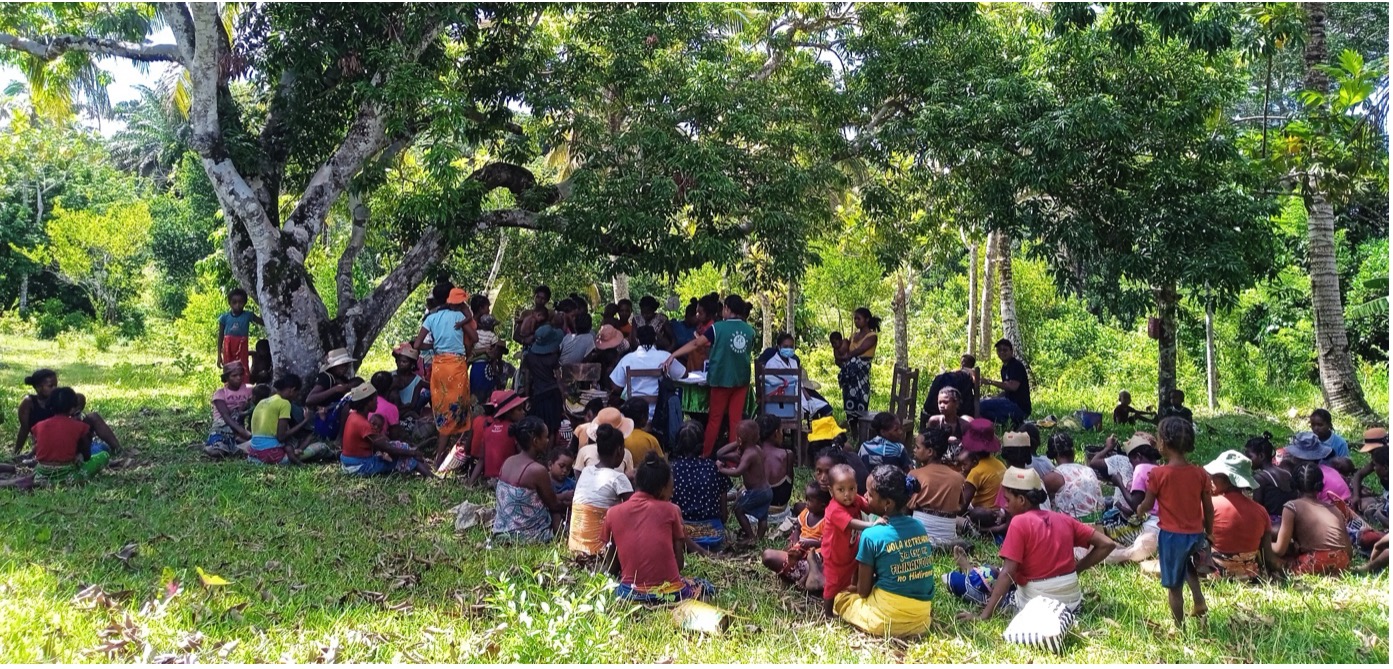
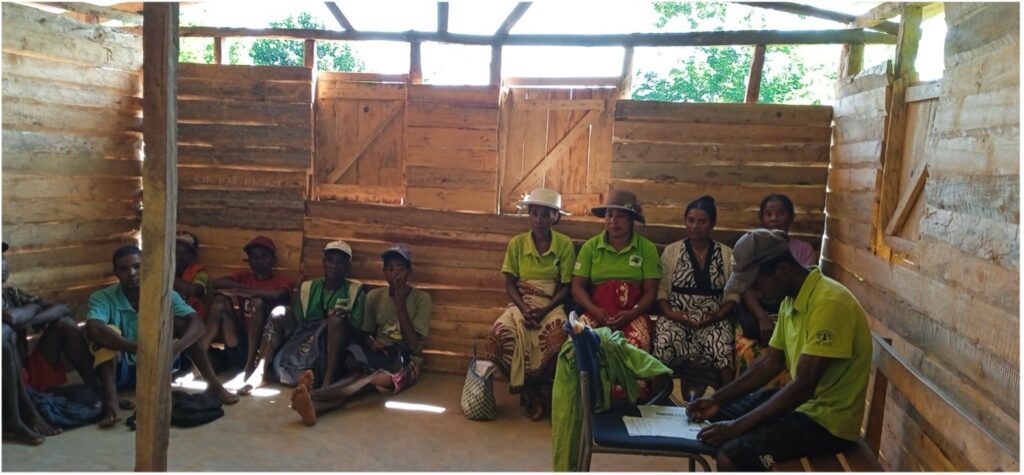
Caption: Community outreach activity in Madagascar- Photo by CRS Madagascar
In the highlands of Madagascar, where rice paddies stretch endlessly and narrow dirt paths wind through small villages, healthcare can feel impossibly distant. For many families, especially mothers, vaccinating a child often meant enduring hours of walking, sometimes with sick children, only to find the clinic closed or the nurse unavailable. 29% of the population are 5 to 10 km from health facilities and 25.8% more than 10km from health facilities (Source: Sectorisation 2019-114 SDSP, SSSD/DEPSI/MSANP, October 2019)
But things are changing. A partnership between the Ministry of Public Health Madagascar, Amref Health Africa, and Catholic Relief Services (CRS) Madagascar —funded by Agence Française de Développement (AFD)—is bringing healthcare directly to these communities. It’s not just about increasing vaccination rates; it’s about restoring the trust, easing fears, and making health a shared, human experience. In Q1 of 2025, the project made some significant strides in integrating COVID-19 into routine immunisation and primary healthcare. A total of 419 CSB staff were trained through IARs and orientation sessions on COVID 19 vaccination and routine immunisation
Bringing Care to Each Doorstep

Caption: RASAHOLINIRINA Marie Suzanne with a CHW in Antanety in Ambohiponana– Photo by CRS Madagascar
In the village of Antsofombato, Marie Suzanne, pregnant with her fourth child, prepared for another long journey to the health center. “It had always been this way—walking for over an hour under the sun, crossing flooded rice fields,” she recalls. She almost postponed her very first first prenatal consultation.
But this time, however, things were different.
“The health workers came to us,” Marie says, visibly relieved. Her first prenatal check-up happened just steps from her home. “It’s simpler now, less restrictive, more reassuring.”
Marie is not alone. Thanks to mobile outreach teams, mothers across Madagascar are experiencing healthcare at their doorsteps. For many, these outreach visits are now a lifeline.
Trust Built in Conversations
Seven-month-old Lario had never been vaccinated. His mother, Falinirina, was afraid—her son had often been sick, and like many parents, she feared that vaccines might worsen his condition. But after speaking with a local community worker during an outreach visit, everything changed.
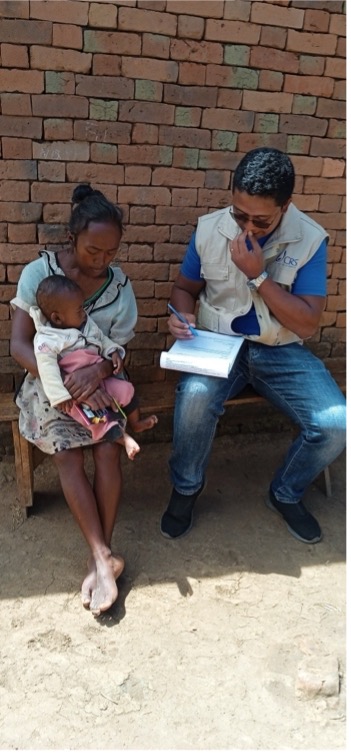
I felt reassured,” Falinirina says. “Now I know he’s protected. We’ll be back for the next dose.”
Her story mirrors many others in villages across Madagascar. What began as hesitation is now replaced with confidence through open conversations. Mothers are talking to mothers, community health workers (CHWs) are listening before advising, and fear is slowly being replaced with trust.
In Ampamoha village, Marie Thérèse recalls the moment she decided to vaccinate her daughter, Olivia, after initially relying on traditional remedies for a rash. During a weighing session hosted by CHWs, she saw other children being vaccinated.
“I was scared at first. But now, I don’t want to wait anymore,” she says.
Caption: Falinirina and Lario with a project staff
Community Health Workers: The Silent Heroes
If you ask anyone in Votsivalana village who they turn to when a child is sick, the answer is always the same: Nadia.
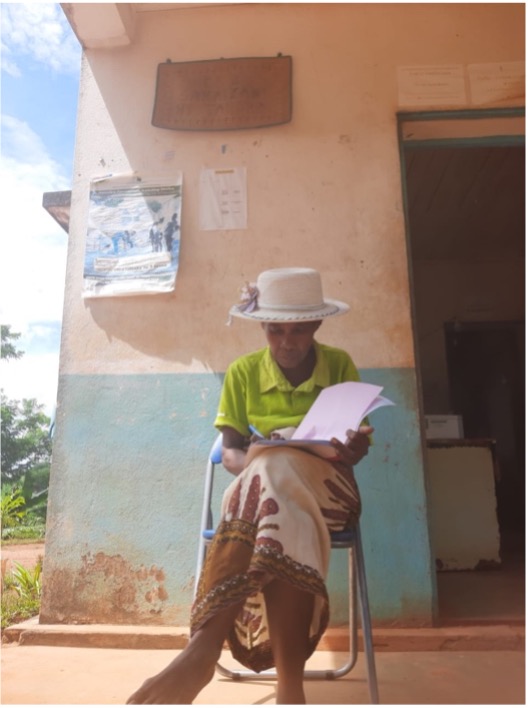
At 58 years old, Nadia has been a community health worker for over two decades. She became a health worker because she was the only one in her village who could read and write. Since then, she’s become the backbone of the village’s health system.
Nadia walks from house to house, checking vaccination cards, educating mothers, identifying signs of illness, and encouraging mosquito net use. At times, she even pays for medicine out of her own pocket when families can’t afford it. “We’re volunteers,” she says, “but we also have families to feed.”
The Vaccination Support Project has provided crucial support, covering her travel costs and including her in training sessions—recognition for her tireless work. Additionally, around 2000 CHWs are supported by the project, the project will not specifically train them as MoH already organised it, but as they are volunteers the project will support them with incentives (financial or not) to keep them motivated in outreach activities but also for participation in monthly coordination meeting with their health facilities.
“I love being a Community Health Worker. I feel useful to my community. I’m respected,” Nadia says.
Her story highlights the indispensable role of CHWs in strengthening local health systems and the importance of long-term support for these unsung heroes.
Vaccines: More than a Gateway to Better Health
Vaccination is more than just a jab—it’s an opportunity to detect malnutrition, counsel families, and strengthen bonds between communities and healthcare providers.
In Nosiala, Marie Nantenaina brought her one-year-old daughter, Francina, to an outreach event for vaccinations. When health workers noticed Francina’s small frame and tired eyes, they suspected malnutrition. They were right.
“I thought she was eating enough,” Marie admitted. “Rice and manioc were all I had.”
Now, Francina is receiving the care she needs, and Marie is learning how to nourish her children better with what little she has. “More parents are asking questions now,” she says. “We’re more aware.”

Marie Nantenaina, together with her daughter Francina who’s arm circumference is being measured
In another village, Olivia, a young mother, had fallen behind on her baby’s vaccine’ schedule due to illness and grief. However, after encouragement from her CHW and newfound reassurance, she brought her child, Tsiaritra, to the next mobile clinic. “I didn’t think it would be this easy,” she says. “Now I feel reassured—and I won’t miss another session.”
A Shared Journey of Hope
Each of these stories—from mothers making informed decisions, to CHWs walking miles to support their neighbours, to children receiving a healthier start—contributes to a larger movement. The Vaccination Support Project is doing more than just improving coverage; it’s rebuilding trust and restoring dignity in how care is delivered.
What once felt distant is now at the doorstep. What once seemed unreachable is now within arm’s length.
And perhaps most powerfully, what once was a struggle—for knowledge, for access, for safety—is becoming a shared journey of hope.
Because when healthcare comes home, everyone has a chance to thrive.
Story written by
David Mitine, Communications Officer, Global Health Security; Miguel Rasolofo – Marketing and Communcations Officer– CRS Madagascar; Liantsoa Amboaramalalaharijaona – Monitoring Evaluation Accountability and Learning Officer – CRS Madagascar; Fanantenana Randriamahenintsoa – Vaccination coordinator- CRS Madagascar and edited by Erick Achola, Global Communications Manager – Amref Health Africa.