
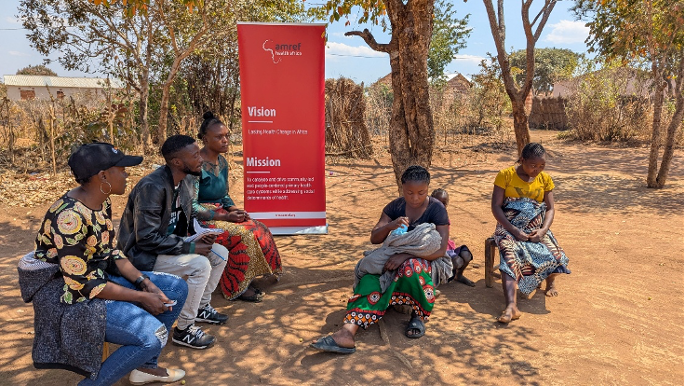
In Zambia’s rural Kanchibiya District, where health facilities are often far and few between, a new generation of frontline health defenders is stepping up. From 18–23 August 2025, Amref Health Africa in Zambia, through its Primary Health Care for Malaria Elimination Project (PHC4ME) and in collaboration with the National Malaria Elimination Centre (NMEC), Muchinga Provincial Health Office, and the Kanchibiya District Health Office, delivered a transformative training programme that could mean the difference between life and death for countless children and families.
At the heart of this initiative are Community Health Workers (CHWs) and Community Change Agents (CCAs), equipped with the practical skills to detect, manage, and refer common childhood illnesses like malaria, pneumonia, and diarrhea before they escalate into emergencies.
Through Integrated Community Case Management (iCCM) training, CHWs learned to use rapid diagnostic tests (RDTs) for malaria, administer first-line treatments like Coartem and Amoxicillin, and screen for malnutrition using MUAC tapes. These lifesaving skills are designed to bring essential care closer to the people, especially in hard-to-reach areas.
At the same time, CCAs underwent intensive training in Social and Behavior Change (SBC) and interpersonal communication, preparing them to promote preventive health behaviors in their communities. From guiding families on malaria prevention and nutrition to supporting pregnant women in seeking antenatal care, CCAs are playing a key role in shifting health practices at the household level.
To ensure sustainability and real-world readiness, all trained CHWs and CCAs will undergo a six-week attachment at nearby health facilities, translating classroom lessons into hands-on learning. This critical phase bridges the gap between training and service delivery, creating a confident, competent, and community-rooted health workforce.
“By building the skills of CHWs and CCAs, we are investing in healthier communities, stronger health systems, and brighter futures for children and families in Zambia,” said Sylvester Daka, Project Officer at Amref.
This initiative is not only a training but a long-term investment in health equity, driven by the power of community-based care. As these volunteers return to their communities, they carry with them not just knowledge, but hope, resilience, and the capacity to save lives where it matters most.