
As Tanzania advances toward universal health coverage and stronger pandemic preparedness, a new vision is taking shape: building resilience through life-course immunisation, vaccination for all age groups, not only children.
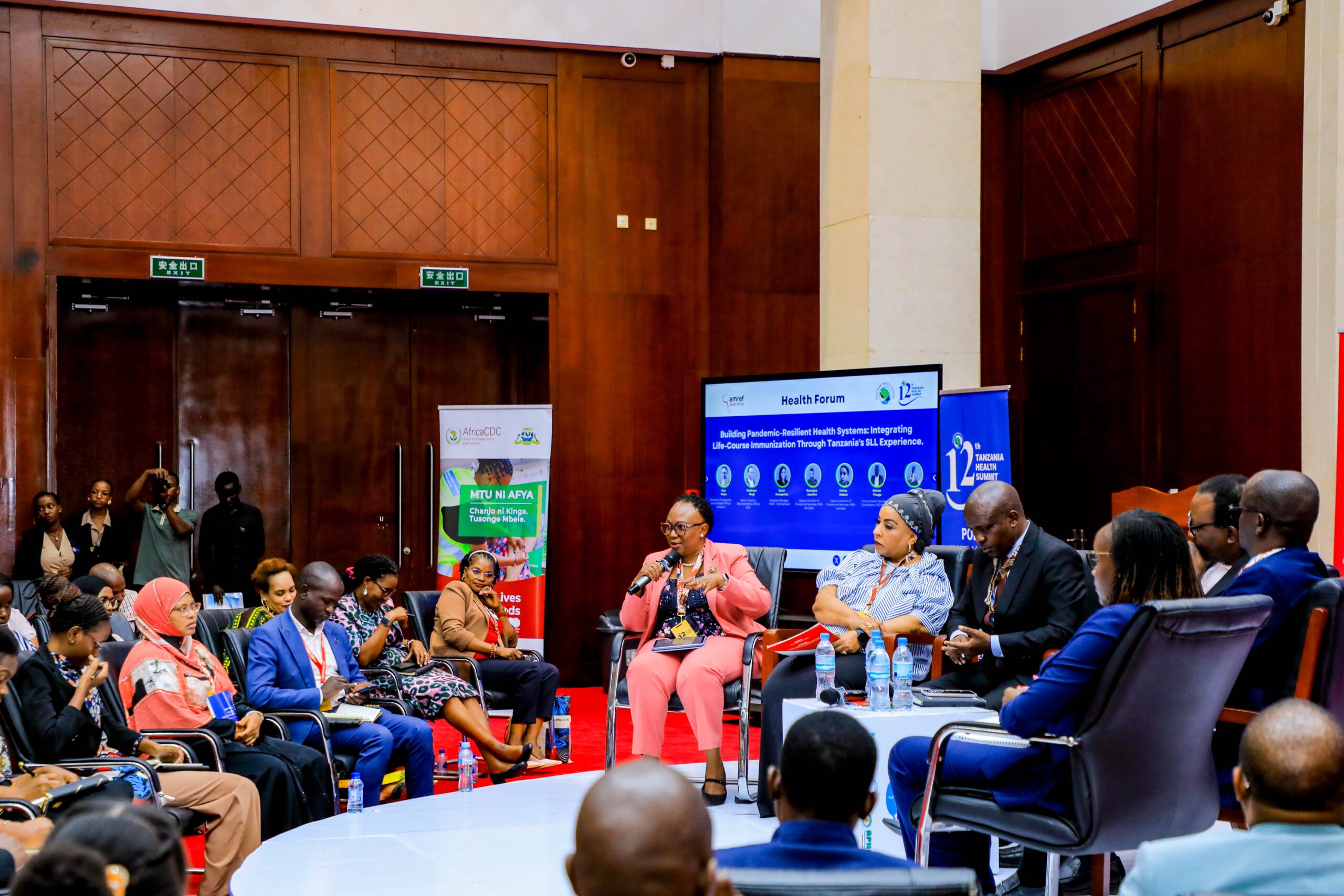
At the 12th Tanzania Health Summit (THS), Amref Health Africa in Tanzania convened a high-level forum titled “Multi-Disease Response Integration: Evidence and Impact from Amref Tanzania’s Saving Lives and Livelihoods (SLL) Experience.” The dialogue brought together government leaders, health professionals, technical partners, and community champions to explore how pandemic-era lessons can be transformed into long-term health system strength.
“Collaboration is the foundation of resilient health systems,” said Dr Florence Temu, Country Director at Amref Health Africa in Tanzania. “When governments, NGOs, communities, and partners work as one, emergencies become opportunities to build stronger, more equitable health infrastructure.”
This spirit framed the discussion. The Saving Lives and Livelihoods (SLL) initiative implemented in partnerships with the Africa CDC and funded by the Mastercard Foundation has become a case study in how targeted responses to COVID-19 and Marburg outbreaks evolved into lasting system improvements, especially in routine immunisation.
From Emergency Response to Everyday Resilience
Dr Sarah Kweyamba presented Tanzania’s first-ever integrated COVID-19–Marburg response. Through mobile outreach, strengthened Community Vaccination Centers (CVCs), and improved protection for health workers, emergency efforts transitioned into a platform for sustained immunisation. “Our goal was not only to respond,” she said, “but to transform readiness into routine resilience.”
From a policy lens, Dr Fatma Kabole highlighted Zanzibar’s alignment with the National Immunisation Strategy (NIS) and the Immunisation Agenda 2030 (IA2030), which helped the island exceed HPV vaccination targets through micro-planning and community engagement. Yet, she cautioned, sustaining momentum requires addressing enduring bottlenecks, cold-chain limitations and rural workforce shortages.
Decentralisation and Data-Driven Delivery
Dr Florian Tinuga from PO-RALG underscored how Tanzania’s decentralised governance model empowers local health teams. Regional and Council Health Management Teams (RHMTs and CHMTs) use digital tools such as TImR, VIMS, and Elmis to track immunisation, identify zero-dose children, and tailor outreach. “Our role,” he said, “is to ensure that policy becomes practice, and that data drives action.”
At the continental level, Dr Robinson Nnaji of Africa CDC shared the After Action Review (AAR) Framework, which enables countries to learn systematically from emergencies. “Preparedness is not just about rapid response,” he noted, “it’s about continuous learning and institutionalising those lessons into systems.”
Dr Juma Mfanga, the Regional Medical Officer of Njombe, shared how localised innovation and deep community ownership improved immunisation coverage in the Southern Highlands. Health teams there deployed mobile vaccination units, engaged community health workers, and mobilised religious and local leaders to increase trust and uptake. He stressed that vaccination becomes a shared responsibility when communities are genuinely involved in planning and delivery.
Moderating the session, Dr Aisa Muya, Director of Programmes at Amref Tanzania, underscored the importance of linking evidence to practice. She concluded that by embedding outreach, immunisation, and community ownership into health systems, countries can move beyond crisis-driven responses toward sustained, equitable care.
Several core themes emerged during the dialogue. Local empowerment through decentralised planning allows services to be better tailored to community realities. Digital tools enable precision in identifying immunisation gaps and guiding interventions. Community engagement through trusted messengers is essential for building lasting trust. Integrating services, such as immunisation with nutrition or maternal health, improves both efficiency and access. And above all, long-term sustainability depends on embedding immunisation into routine health services, budgets, and governance structures.
“Let’s build systems that aren’t just reactive but are continuously learning, inclusive, and grounded in the communities they serve,” urged Dr Muya, echoing the collective vision of the forum.
This dialogue demonstrated that health system resilience is no longer a distant goal in Tanzania, it is already taking root. From Njombe’s community-led outreach to Zanzibar’s strategic alignment, the SLL experience offers a powerful model of how data, collaboration, and community power can be aligned to protect lives and reduce health inequities.
As Tanzania looks ahead to 2030, Amref remains steadfast in its commitment to strengthening life-course immunisation, investing in community health workers, and embedding equity into every layer of health delivery by building people-centered systems that are ready for future threats and responsive to everyday health needs, leading the way for public health transformation across Africa.