

Every month, thousands of girls across Zambia miss school because they cannot afford menstrual products. At the same time, plastic waste continues to pile up in communities with limited recycling systems, creating environmental and public health risks.
For Zambian social entrepreneur Mwinji Nakamba, these were not separate problems, but an opportunity to build one sustainable solution.
Today, through her enterprise WasteMat Zambia, Mwinji is transforming plastic waste into reusable menstrual health products while creating dignified work opportunities for young people and women. Her work demonstrates how youth-led entrepreneurship can strengthen health systems, improve environmental sustainability, and build more resilient communities.
Her journey also reflects the vision of the Africa Health Collaborative (AHC), implemented by Amref Health Africa in Zambia in partnership with the Mastercard Foundation, which supports young people to access dignified and fulfilling work through entrepreneurship, innovation, and leadership.
From Journalism to Social Innovation
Mwinji’s path into entrepreneurship was shaped by what she witnessed as an investigative journalist.
“I saw how plastic pollution was affecting communities, but I also saw how period poverty continued to undermine the dignity, health, and education of girls and women,” she explains. “I realised these challenges were connected and that we needed solutions that addressed both.”
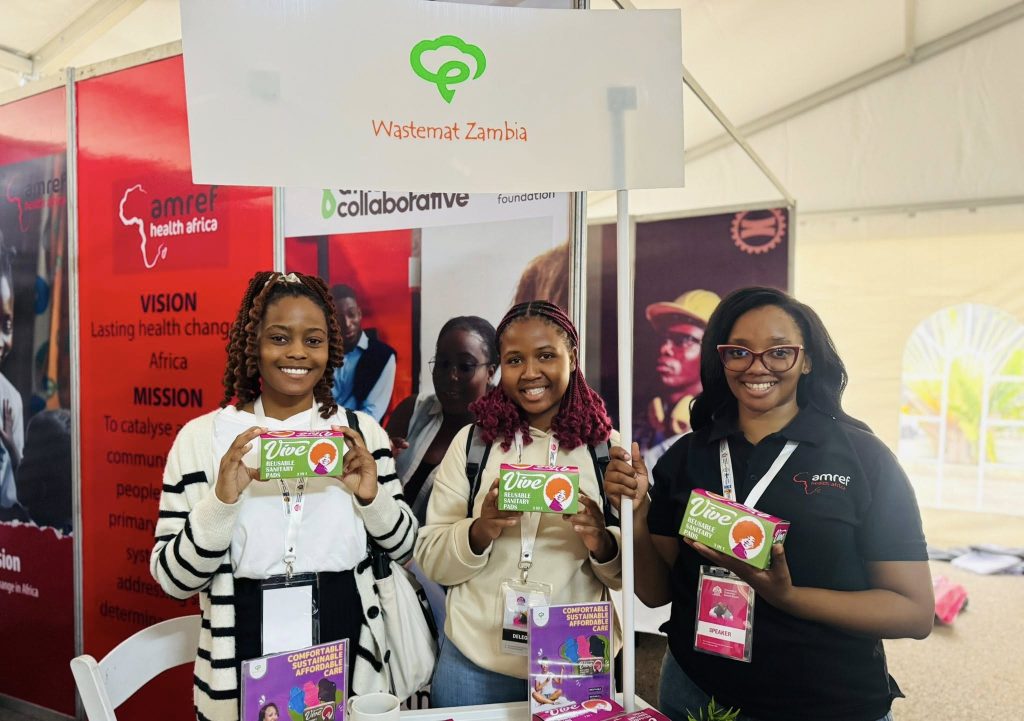
That idea led to the creation of WasteMat Zambia, a circular economy initiative that transforms discarded plastic waste into economic value that helps finance the production and distribution of Vive Pads, reusable and eco-friendly menstrual products designed to make menstrual health more affordable and sustainable.
The model is helping communities tackle environmental waste while improving menstrual health awareness, increasing girls’ school participation, and creating income opportunities for women and youth distributors.
“This is what I call a clean-health loop,” says Mwinji. “Environmental action funds health solutions, and health solutions strengthen economic resilience.”
Building Dignified Work for Young People
Beyond menstrual health, WasteMat is also helping address one of Zambia’s growing development challenges, youth unemployment.
Like many young entrepreneurs, Mwinji faced major obstacles when starting out.
“There was a significant trust gap,” she says. “Waste management is largely male-dominated, and accessing processing equipment required capital that I simply didn’t have.”
Her breakthrough came after responding to an open innovation call under the Africa Health Collaborative.
“What stood out for me was that the Collaborative understood that health is broader than clinical care. It includes dignity, environment, livelihoods, and equity.”
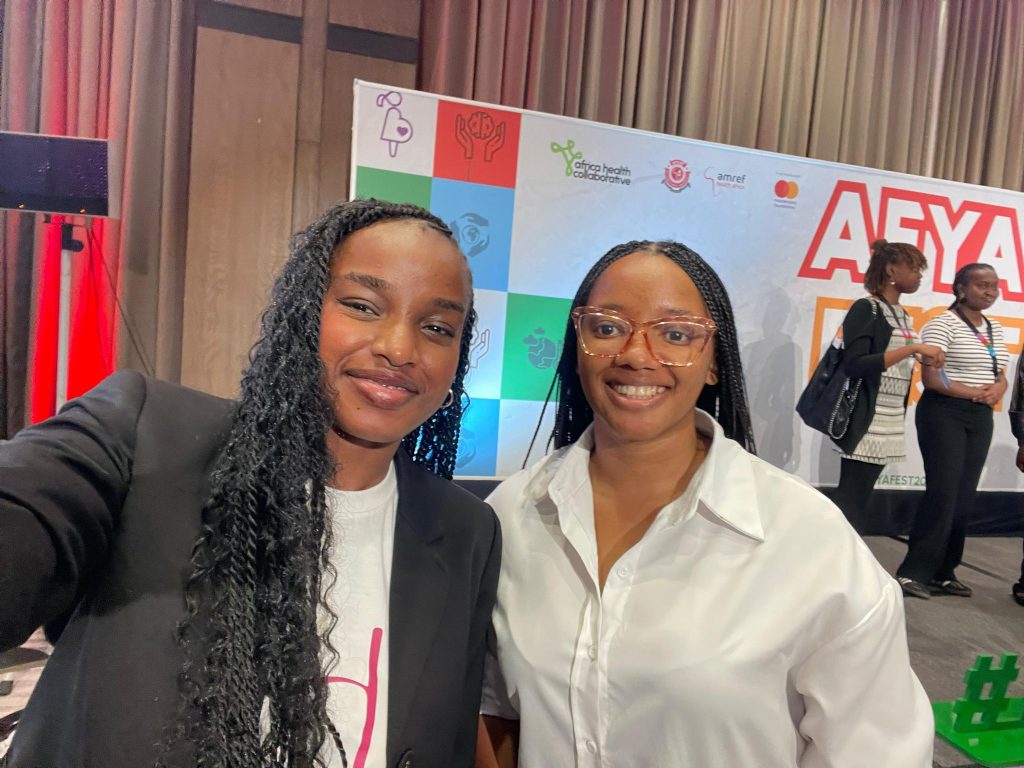
Through the Collaborative, Mwinji gained access to mentorship, business masterclasses, investor-readiness support, and innovation platforms such as Afya Fest, helping her strengthen both the enterprise and its long-term sustainability.
One of the biggest shifts was learning how to measure impact beyond activities alone.
“Before Amref and the AHC project, we mainly measured how much plastic we collected,” she says. “Now, we measure health outcomes, education outcomes, and community impact.”
With support from the AHC, WasteMat strengthened its financial planning, pitching capacity, and Social Return on Investment analysis. This growth helped the enterprise secure a government tender through Zambia’s Ministry of Education under the Presidential Unity Programme, significantly expanding both its reach and credibility.
The support also helped WasteMat move into formal market systems. Through partnerships facilitated by the AHC, Vive Pads are now distributed through WeCure Pharmacy and other pharmacy outlets, improving access for women and girls.
Health, Climate, and Community Impact
WasteMat’s impact now extends across multiple sectors like health, environment, education, and economic empowerment.
To date, the initiative has:
- Reached more than 40,000 women
- Supported over 10,000 adolescent girls
- Created income opportunities for women distributors and community champions
But for Mwinji, the real impact is seen in the lives behind the numbers.
In communities where WasteMat operates, families are experiencing cleaner environments, increased menstrual hygiene awareness, and improved access to affordable menstrual products. Women and young people involved in distribution networks are also earning incomes while becoming advocates for health and environmental sustainability in their communities.
At the centre of her story is a powerful message about meaningful youth engagement.
“The Africa Health Collaborative treats youth innovation as an essential part of the health ecosystem, not as a side project,” Mwinji says.
By equipping young innovators with mentorship, networks, and opportunities to lead, the Collaborative is helping shape a future where young people are not only beneficiaries of development, but architects of sustainable solutions.
Looking ahead, Mwinji hopes to establish a Regional Circular Health Hub in Zambia with potential for expansion across Africa.
“My goal is to eliminate menstrual poverty for one million girls through sustainable, recycled health products,” she says.
Her journey demonstrates what becomes possible when young people are trusted, supported, and empowered to innovate. It also highlights how entrepreneurship can contribute directly to healthier, more resilient communities.
As Africa continues to confront interconnected challenges, from unemployment and climate change to health inequities, young innovators like Mwinji are proving that solutions can emerge from within communities themselves.
Reflecting on her experience, she shares:
“Thank you for believing that a journalist with a green idea could help change the health landscape. The Africa Health Collaborative proves that when young people are trusted and equipped, they build solutions that create dignified work, strengthen systems, and improve lives.”
Author: Alice Mapulanga, Amref Health Africa in Zambia