
“Healthy soils produce healthy food. Healthy food supports healthy people.”
For many people, organic waste is simply something to throw away.
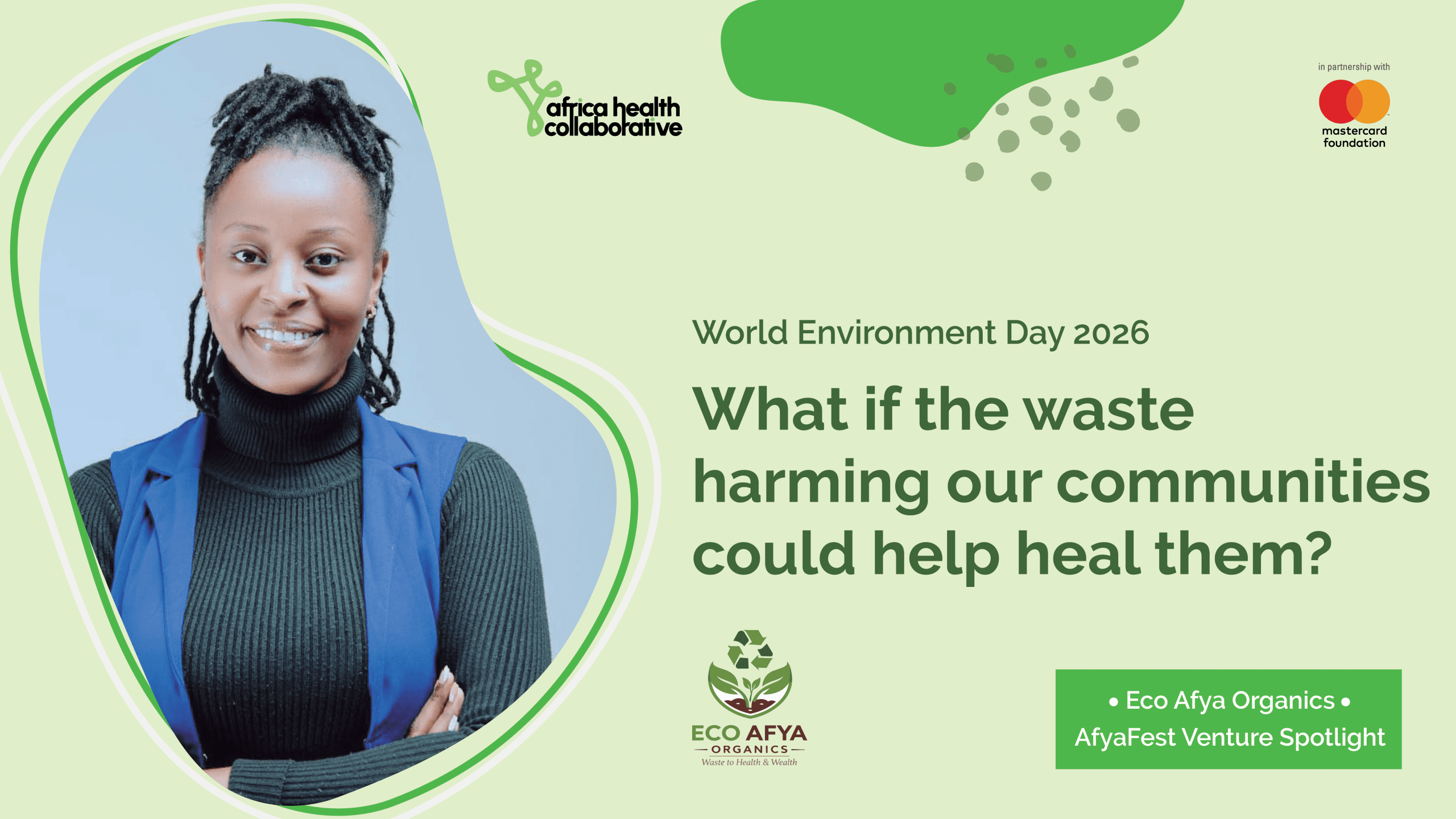
For Mugi Maryanne, founder of Eco Afya Organics, it represented something entirely different: an opportunity to solve some of the most pressing challenges facing communities today.
As a nursing student and climate advocate, Mugi began noticing a troubling connection between environmental degradation and human health. Organic waste piling up in communities was not only creating environmental hazards but also contributing to public health risks.
When organic waste decomposes in open dumpsites, it releases methane, one of the world’s most potent greenhouse gases linked to over one million premature deaths annually. Poor waste management also contributes to environmental pollution, contaminates water sources, and creates conditions that increase the risk of respiratory and waterborne diseases.
At the same time, farmers across Kenya were facing another crisis.
Years of soil degradation had left many struggling with declining harvests and rising production costs. To maintain productivity, many turned to chemical fertilizers and pesticides that further depleted soil health while exposing communities to harmful agrochemicals.
For Mugi, the irony was impossible to ignore.
The same waste silently harming communities had the potential to heal them. Instead of allowing the waste we throw away to slowly throw our lives away, it could be transformed into a solution that restores soils, improves food production, strengthens livelihoods, and builds healthier futures.
That realization led to the birth of Eco Afya Organics.
Transforming Waste into Opportunity
Eco Afya Organics operates at the intersection of climate action, public health, and sustainable agriculture.
The venture collects organic waste and transforms it into premium organic agricultural inputs, including organic fertilizer, liquid foliar feeds, and organic pesticides.
By converting waste into valuable resources, the venture is helping farmers improve soil health, increase productivity, and produce healthier food while reducing environmental pollution.
But the impact goes far beyond agriculture.
The model demonstrates how circular economy solutions can simultaneously address waste management, climate resilience, food security, public health, and youth employment.
Restoring Hope in Farming
Among those benefiting from Eco Afya Organics are farmers who have long struggled with declining soil fertility, rising fertilizer costs, and disappointing harvests.
Many shared stories of traveling long distances to access fertilizer, waiting in long queues during planting seasons, and paying increasingly high prices for products that often failed to deliver results.
Despite their efforts, soil quality continued to deteriorate, making it harder to support their families through farming.
After testing Eco Afya Organics’ products, farmers began reporting healthier crops and improved yields. Yet what stood out most was not the increase in harvests.
It was the return of hope.
One farmer shared that for the first time in years, she felt hopeful about farming again.
For Mugi and her team, that statement reinforced the deeper purpose behind their work.
Eco Afya Organics is not simply converting waste into agricultural inputs.
It is helping farmers rebuild confidence, strengthen livelihoods, and see farming as a viable and sustainable future.
Turning Waste into Health and Wealth
In just two years, Eco Afya Organics has demonstrated the potential of innovation-led sustainability.
The venture has:
- Diverted over 2.5 tonnes of organic waste from dumpsites
- Produced more than 1,200 kilograms of organic fertilizer
- Produced 100 litres of organic liquid foliar feed
- Produced 100 litres of organic pesticide
- Sold more than 640 kilograms of organic fertilizer
- Supported pilot testing with local farmers
- Promoted improved waste segregation practices among households
- Created green livelihood opportunities for youth and women
Beyond these numbers, the venture is helping communities rethink waste itself.
Rather than viewing organic waste as a problem, Eco Afya Organics is demonstrating that it can become a valuable resource capable of generating jobs, restoring ecosystems, strengthening food systems, and improving health outcomes.
Building Healthier Communities Through Circular Solutions
At the heart of Eco Afya Organics is a simple belief:
Healthy communities begin with a healthy environment.
Through its circular economy model, the venture reduces methane emissions, promotes cleaner waste management practices, improves soil fertility, supports healthier food production, and strengthens community resilience.
The result is a ripple effect that benefits farmers, families, consumers, and the environment alike.
By connecting climate action with public health and agriculture, Eco Afya Organics is showing how local innovation can create solutions that address multiple challenges at once.
The AfyaFest Effect
Participating in AfyaFest 2025 became an important milestone in the venture’s journey.
While Eco Afya Organics did not emerge among the winning ventures, the experience provided something equally valuable.
- Mentorship.
- Feedback.
- Exposure.
- And access to a community of innovators working to solve Africa’s biggest challenges.
For Mugi, AfyaFest broadened her perspective as a founder and strengthened her confidence in the venture’s potential. The experience encouraged her to refine the business model, think bigger about impact, and pursue the mission with even greater purpose.
Today, as Eco Afya Organics continues to grow, the lessons, networks, and opportunities gained through AfyaFest continue to shape its journey.
Looking Ahead
Eco Afya Organics envisions a future where farmers adopt bio-based agricultural inputs and build more resilient farming systems.
A future where healthy soils produce healthy food.
Where healthy food supports healthy people.
And where waste is no longer seen as a burden but as a powerful resource for building resilient communities.
By turning waste into health and wealth, Eco Afya Organics is proving that some of the most impactful solutions are hidden within the challenges we often overlook.