
Sometimes the biggest breakthroughs in health programmes do not come from new technologies or larger budgets. They come from listening.
That lesson became clear during the implementation of the Africa CDC Saving Lives and Livelihoods (SLL) project, funded by Mastercard Foundation, in Nigeria.
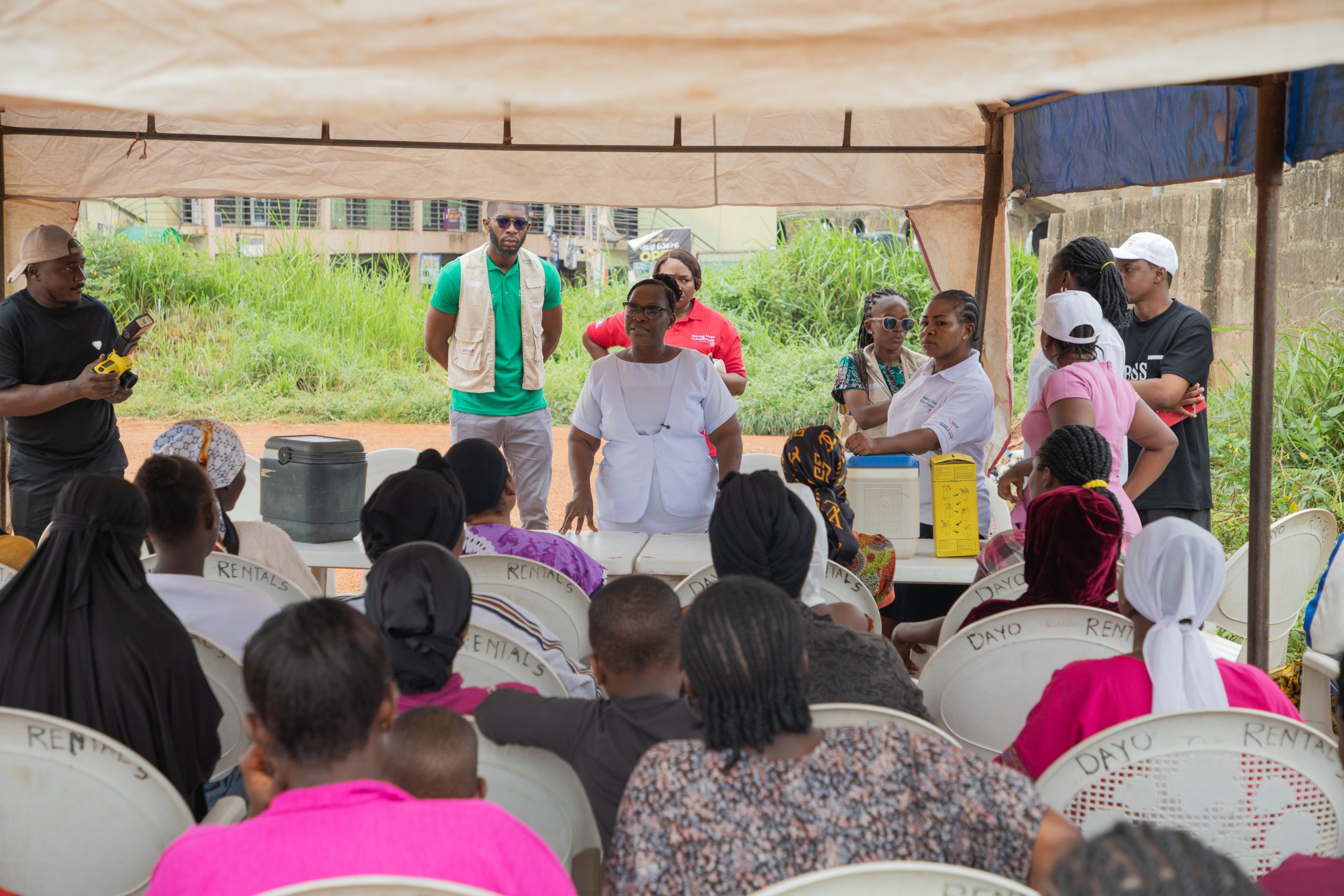
The project was supporting health workers through refresher training on integrated service delivery for life-course immunisation. As part of the training, participants were required to complete assessments before and after each session to measure knowledge gained.
On paper, the process seemed straightforward. The assessments were hosted online and could be accessed through web-based forms. In reality, many health workers faced a different experience.
In several training locations, internet connectivity was unreliable. Some participants did not have active data subscriptions, while others struggled to navigate unfamiliar online platforms. What was designed as a simple learning exercise quickly became a source of frustration. Some participants could not complete the assessments at all.
The experience exposed an important challenge. If health workers could not easily access the tools designed to support their learning, how could the programme accurately measure its impact?
Rather than accepting the problem, the team decided to rethink its approach.
As preparations began for the next phase of training for immunisation managers and frontline health workers across multiple levels of the health system, a simple question emerged: Why introduce new technology when health workers were already using tools that worked?
The answer led the team to Open Data Kit (ODK), a mobile data collection platform already familiar to many health workers across Nigeria. Unlike traditional web-based forms, ODK allows users to complete assessments offline and only requires internet access when downloading forms or submitting completed responses.
The shift was simple, but the results were remarkable.
More than 95% of participants already had ODK installed on their phones. Instead of navigating unfamiliar platforms, participants simply scanned a QR code and accessed the assessment immediately.
The result was a 100% completion rate.
Every participant successfully completed and submitted their assessments.
For many health workers, the difference was immediate.
“When we first tried the online forms, many of us struggled because of poor internet,” recalled one participant. “But with ODK, it was simple. I already had the application on my phone, and I could complete the test without worrying about connectivity. It made learning much easier.”
The experience revealed something important. The challenge was never about a lack of willingness or capability among health workers. The challenge was the tool itself.
By adapting the technology to fit the realities of frontline workers, the project improved participation, reduced barriers, and created a more inclusive learning experience.
More importantly, it demonstrated a valuable lesson for health systems strengthening.
Too often, programmes introduce new technologies because they appear modern or innovative, without considering whether they fit the context in which people work. Yet the most effective solutions are often the ones that build on existing knowledge, familiar tools, and local realities.
Innovation is not always about creating something new. Sometimes it is about recognising what already works and making better use of it.
For the Saving Lives and Livelihoods project, the transition from web-based forms to ODK was more than a technical adjustment. It was a reminder that successful digital transformation begins with understanding the people who use the technology.
By listening to health workers and responding to their needs, the project turned a challenge into an opportunity, and in the process demonstrated that small changes can often lead to the biggest impact.
As countries continue investing in digital health solutions, this experience offers a simple but powerful lesson: lasting progress happens when technology adapts to people, not when people are forced to adapt to technology.
Authors
Ikechukwu Okpe (M&E Lead), Sydani Initiative
Boubacar Diallo, M&E Officer, Amref West Africa
Edited by David Mitine, Communications Officer, Global Health Security Unit, Amref Health Africa.