

We are committed to seeing eCHIS become an end-to-end referral system that truly connects our communities with quality care,” affirmed Mrs Anne Wanyaga, Director of Public Health, Machakos County.
In the hills of Matungulu and Kangundo sub-counties in Machakos County, a quiet digital revolution is unfolding. Amref Health Africa, in collaboration with Dalberg, the Ministry of Health Kenya, and the Machakos County Government, recently led a health system immersion exercise to assess and enhance the Electronic Community Health Information System (eCHIS), a national platform transforming how health services are delivered at the last mile. Funded by the Gates Foundation, this initiative not only evaluated how eCHIS is working on the ground but also explored how Generative AI (GenAI) could unlock greater efficiency, accuracy, and reach in community health delivery.
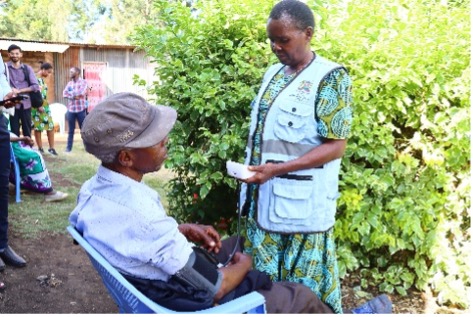
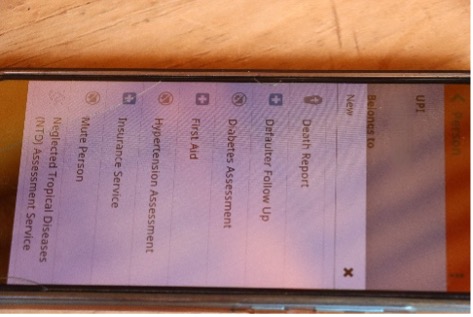
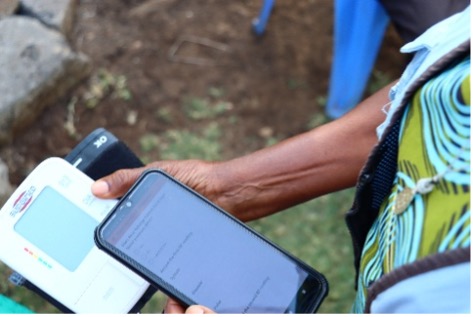
Since its rollout in 2022, eCHIS has digitised the work of Community Health Promoters (CHPs), locally known as Daktari wa Mtaani. Using government-issued smartphones, CHPs can now log household data, track patient visits, and receive automated task notifications. This shift has significantly reduced paperwork, improved coordination with Community Health Assistants (CHAs), and increased the visibility of local health needs.
During the immersion, Amref and partners engaged CHPs, CHAs, county health officials, and local community members to gain practical insights into the system’s performance. Several challenges surfaced. CHPs still rely on manual judgment to prioritise household visits, even when the system sends prompts. The platform lacks mechanisms to validate entries or track changes, which can compromise data accuracy. CHAs, while able to view incomplete tasks, don’t have real-time dashboards to monitor performance or generate instant reports. In some remote areas, poor network coverage has forced CHPs to revert to manual data entry, reducing the benefits of digitisation.
Yet, amid these gaps lies immense potential. Generative AI could be the game-changer that elevates eCHIS from a digital tool to a dynamic, intelligent health system enabler. GenAI can analyse patient history, location, and case urgency to help CHPs prioritise visits more effectively. It can validate data in real-time by flagging anomalies, improving the integrity and reliability of community-level data. By identifying trends and patterns, GenAI could provide early warnings for disease outbreaks, enhancing local surveillance. Additionally, it could automate the generation of performance summaries for CHAs, reducing administrative burdens and enabling better supervision.
To bring this vision to life, several actionable steps have been proposed. First, the system must be optimised for responsiveness and ease of use. Offline functionality should be enabled to support data entry in low-connectivity areas. CHPs need targeted training to improve their digital literacy and confidence in using GenAI tools. For referrals to work seamlessly, eCHIS must be integrated with health facility systems. Lastly, incorporating GenAI-driven decision support would allow CHPs to receive intelligent recommendations for diagnosis, treatment, and follow-up care based on patient data.
What stood out most during the immersion was not just the technology, it was the people behind it. The passion of CHPs, the vision of public health leaders like Mrs Wanyaga, and the trust of local communities revealed a shared commitment to building a smarter, more inclusive health system. As one county health official put it, “I want to see a future where CHPs are supported by real-time, intelligent systems that allow them to deliver care faster, better, and closer to home.”
This aligns closely with Amref’s broader mission to advance community-led, people-centered primary health care. By investing in innovations like GenAI and building on the foundation laid by eCHIS, Amref is not only improving care delivery, diagnosis, referral systems, and disease surveillance, but also helping to build resilient, accountable, and equitable health systems across Africa.
This is not merely a digital upgrade, but a human-centered transformation to ensure no one is left behind.
For further insights on the immersion experience, visit:
Blessings Ngode – Communications Intern, Amref Health Africa in Kenya