
Structured performance systems are reshaping Malawi’s health sector. For the first time, frontline health workers are setting measurable goals, tracking progress, and delivering with renewed motivation. Here’s how the Global Health Workforce Project is turning commitment into accountability.

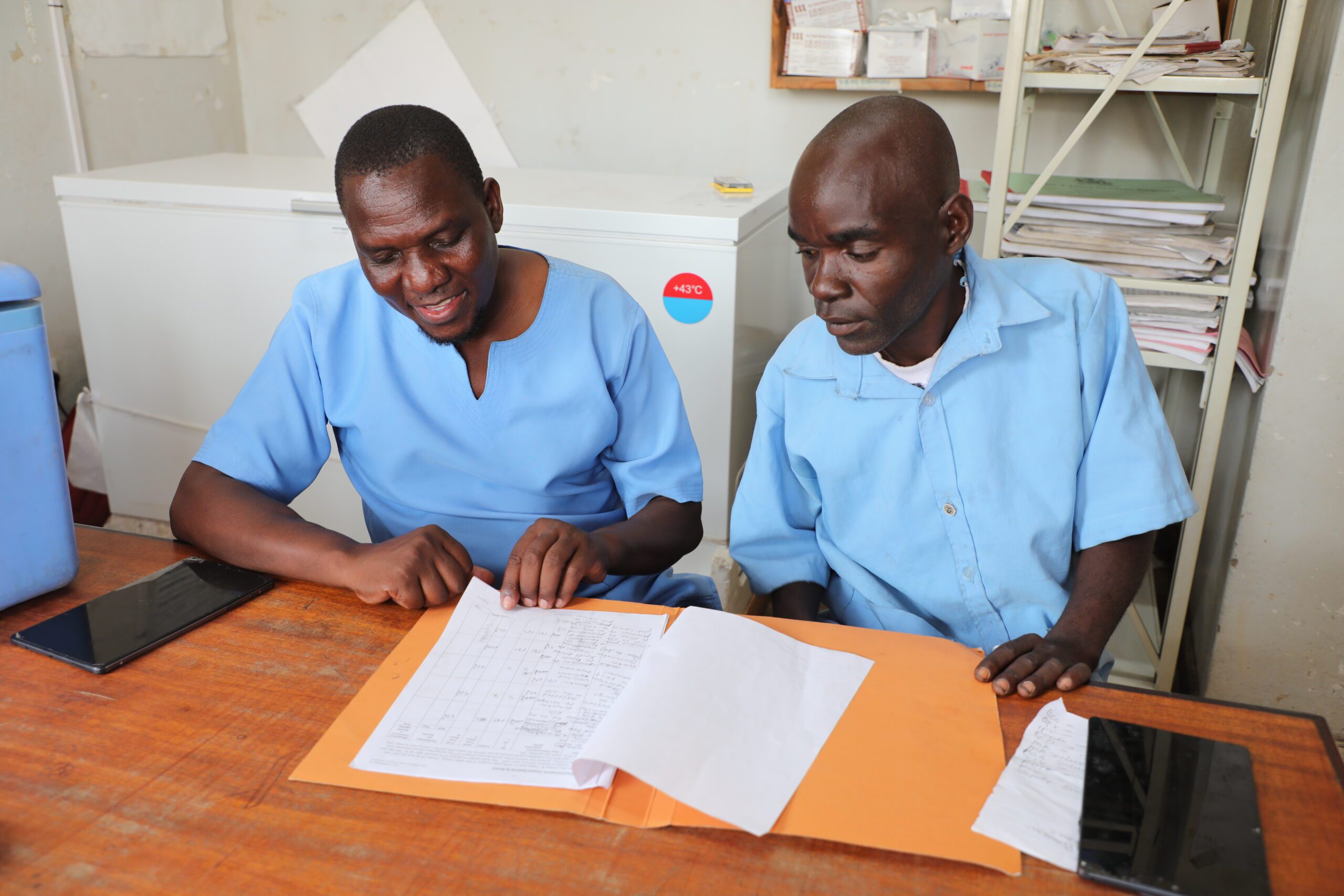
For nearly two decades, Bright Sumaili, a Senior Disease Control and Surveillance Assistant (DCSA) at Maganga Health Centre in Salima, has served his community with dedication. Yet after 18 years of service, this year marked a turning point, his first-ever formal performance appraisal.
“Before this training, we never used to have detailed workplans,” he recalls. “Now, I know my objectives, my targets, and the timelines to achieve them. When working, you need to have clear objectives and strategies. This helps me deliver better.”
For years, Malawi’s frontline health workers, the backbone of community health, worked without structured systems to track or evaluate performance. Appraisals were inconsistent, often done only during promotions, leaving little room for feedback or professional growth.
Without clear goals or measurable indicators, it was difficult for health workers to track progress or demonstrate impact, affecting both motivation and the quality of service delivery at the community level.
The Intervention: A System that Builds Accountability
Sumaili is one of the health workers trained through the Global Health Workforce Project (GHWP II), a one-year initiative led by Amref Health Africa in Malawi, in partnership with the Medical Council of Malawi. Implemented in Salima, Mangochi, Chikwawa, and Karonga, the project is focused on strengthening Malawi’s health workforce to build resilient systems for post-pandemic recovery and accelerate progress toward Universal Health Coverage (UHC). The project is funded by the UK Department of Health and Social Care through Global Health Partnerships (formerly THET).
Under the initiative, over 800 health workers, including 731Disease Control and Surveillance Assistants formerly Health Surveillance Assistants (HSAs), 65 supervisors, and 10 managers, have been trained in Performance Management Systems (PMS), Continuing Professional Development (CPD), and Gender Equality and Social Inclusion (GESI).
Through PMS, every community health worker now has a clear annual workplan with defined objectives and measurable targets. Supervisors and supervisees can monitor progress together, ensuring transparency, accountability, and continuous improvement.
“When someone comes to work, they now know what is expected of them,” explains Wiltono Banda, Assistant Environmental Health Officer at Salima District Health Office. “It also allows them to do self-audits. Supervisors can review progress based on evidence. Before, there was little to show, but now every HSA has a file tracking their performance.”
Renewed Motivation and Measurable Impact
For the first time, frontline health workers like Sumaili are setting measurable goals, and seeing tangible improvements.
“In just this period, we have managed to increase immunization coverage from 66% to 80%,” he says proudly. “I am motivated because I know my targets and can measure my progress. My goal now is to reach 100%.”
This structured approach has not only improved service delivery but also strengthened communication between supervisors and their teams. Regular feedback sessions encourage problem-solving and collaboration, building trust and mutual accountability.
By linking individual workplans to national health priorities, GHWP II is also tackling one of the sector’s biggest challenges, sustaining motivation. Every health worker now understands how their daily actions contribute to broader community health goals, from increased immunization coverage to enhanced disease surveillance.
“Appraisals will help HSAs improve service delivery and their interaction with supervisors,” adds Chifundo Kalenga, a DCSA at Lifuwu Health Centre. “I also hope that those who missed the first training will get the same opportunity.”
A More Accountable and Resilient Health System
Health workers are now more engaged, confident, and driven by purpose. They no longer just perform tasks, they plan, implement, and assess their work with clarity and ownership.
By strengthening leadership capacity, integrating continuous professional development, and advancing gender equality, GHWP II is laying the foundation for a motivated, accountable, and resilient health workforce.
“Now, we are not just working, we are working with purpose,” says Sumaili. “We know where we are going, and we have the tools to get there.”
As Amref Health Africa in Malawi continues to partner with the Ministry of Health, the lessons from GHWP II are paving the way for a more resilient, efficient, and people-centred health system, one where performance management is not just a process, but a pathway to lasting health impact.
Author: Lusayo Banda, Communications Manager, Amref Health Africa, Malawi.